
You’ve heard the myths: oral sex is safe. No penetration, no risk. But here’s the truth-going unprotected during oral sex isn’t risk-free. It’s not about fear. It’s about awareness. Every year, thousands of people contract STIs through oral sex without protection. And most of them had no idea it was even possible.
Quick Takeaways
- STIs like gonorrhea, chlamydia, syphilis, and herpes can spread through oral sex-even without ejaculation.
- HIV transmission during oral sex is rare, but not impossible, especially with open sores or bleeding gums.
- HPV linked to throat cancer can be passed through oral contact, and vaccination is your best defense.
- Using dental dams or condoms during oral sex cuts transmission risk by over 80%.
- Regular testing is non-negotiable if you’re sexually active, regardless of the type of sex you’re having.
Why Oral Sex Without Protection Is Riskier Than You Think
Many people assume that because oral sex doesn’t involve vaginal or anal penetration, it’s automatically safe. That’s a dangerous assumption. Your mouth, throat, and genitals are lined with mucous membranes-thin, moist tissues that viruses and bacteria can easily slip through. You don’t need to ejaculate or have an orgasm for transmission to happen. Just contact with infected fluids-pre-cum, saliva, vaginal secretions-is enough.Let’s say you’re giving oral sex to someone with untreated gonorrhea. The bacteria can settle in your throat. You might feel fine. No sore throat. No fever. But you’re now a carrier. You can pass it to your next partner. Same goes for chlamydia. Both are often symptom-free, especially in the throat, which is why they spread silently.
Herpes is another silent threat. If your partner has a cold sore-or even a tiny, invisible outbreak-you can catch HSV-1 orally. That might show up as a blister on your lip… or it might never show up at all. But you can still pass it to others.
And then there’s HPV. Human papillomavirus. It’s not just about cervical cancer. HPV types 16 and 18 are now the leading cause of oropharyngeal (throat) cancer in men under 50. Studies show that people who’ve had six or more oral sex partners have a significantly higher risk. And yes-it can be passed without symptoms, without visible warts, without warning.
What STIs Can You Actually Get From Oral Sex?
Here’s what you’re actually at risk for when you skip protection:- Gonorrhea - Can infect the throat. Often symptomless. Can spread to other parts of the body if untreated.
- Chlamydia - Also thrives in the throat. Rarely causes pain, but can lead to serious reproductive issues if passed to a partner.
- Syphilis - Starts with a painless sore (chancre) on the lips, tongue, or genitals. If missed, it moves into the bloodstream and damages organs.
- Herpes (HSV-1 and HSV-2) - HSV-1 (cold sores) can spread to genitals. HSV-2 (genital herpes) can spread to the mouth. Both are lifelong.
- HPV - Linked to throat cancer. No cure. Vaccine prevents the worst strains.
- HIV - Transmission risk is low during oral sex, but not zero. Higher risk if you have cuts, sores, or gum disease, or if your partner has a high viral load.
- Hepatitis B - Spread through bodily fluids. Can cause liver damage. Preventable with a vaccine.
Here’s the kicker: many of these infections don’t show symptoms for weeks or months. You could be spreading something you don’t even know you have.
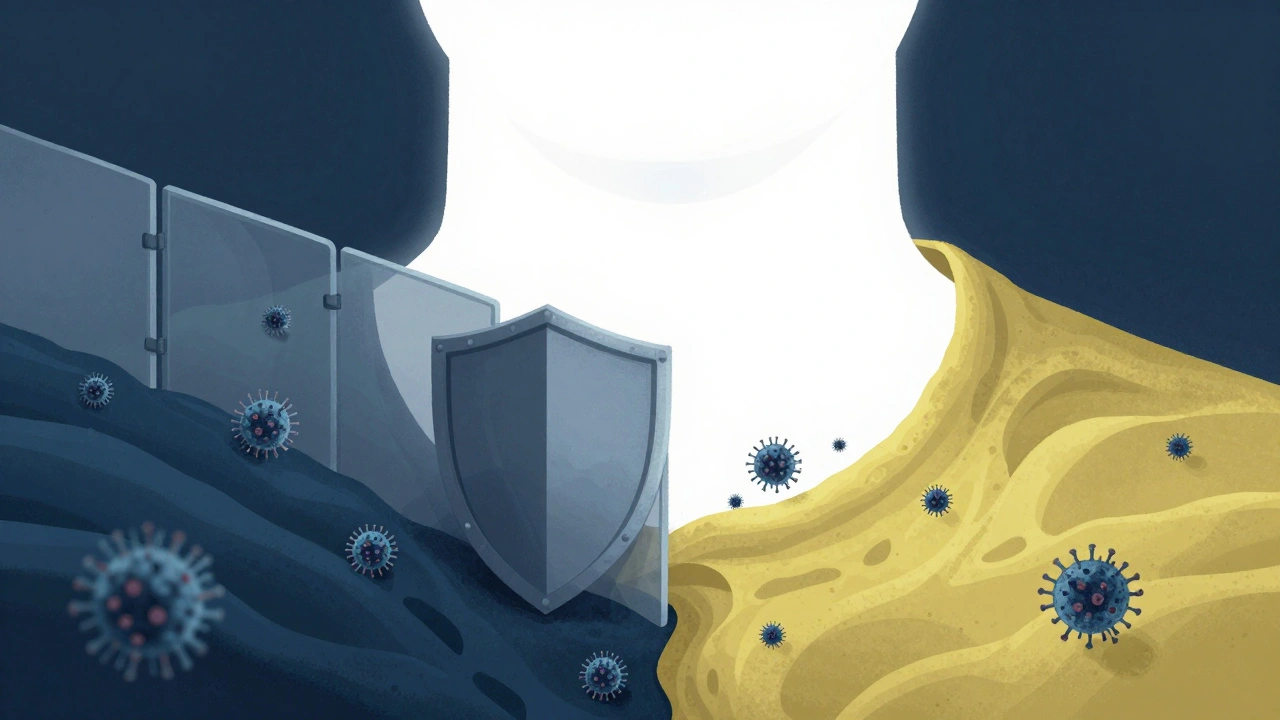
How to Protect Yourself-Without Killing the Mood
You don’t have to give up oral sex to stay safe. You just need the right tools.Dental dams are thin latex or polyurethane sheets designed for oral-genital contact. They’re not as common as condoms, but they’re just as effective. You can buy them online or make one by cutting open a condom lengthwise. Some people find them awkward at first, but with practice, they become second nature.
Condoms work great for oral-penile contact. Use a new one every time. Flavored condoms are widely available and designed specifically for this purpose. No need to use lubricants with glycerin or sugars-they can irritate sensitive tissues.
And here’s a simple rule: if it touches your mouth, use protection. That includes fingers, toys, or even shared sex tools. Cross-contamination is real.
Also, avoid oral sex if you or your partner have:
- Open sores, cuts, or ulcers in the mouth or on the genitals
- Bleeding gums or recent dental work
- Any signs of infection-discharge, itching, burning
And yes-brushing your teeth right before oral sex isn’t a good idea. It can create tiny cuts in your gums. Wait at least 30 minutes after brushing.
Testing Is Non-Negotiable
If you’re sexually active, get tested regularly. And yes-that includes your throat.Most clinics offer throat swabs for gonorrhea and chlamydia. They’re quick, painless, and often included in routine STI panels. Don’t assume a blood test or urine test covers everything. If you’ve had oral sex, ask for a throat swab. If you’ve had anal sex, ask for a rectal swab. You’d be surprised how many people don’t know these tests exist.
Get tested every 3-6 months if you have multiple partners. If you’re in a monogamous relationship, test at least once a year. And if you’ve had unprotected oral sex with someone new, get tested 2 weeks after exposure. Some infections show up fast.
HPV Vaccine: Your Best Defense
The HPV vaccine (Gardasil 9) isn’t just for teens. It’s recommended for anyone up to age 45. It protects against nine strains of HPV, including the ones most likely to cause throat cancer. If you’re over 26 and haven’t been vaccinated, it’s not too late. Talk to your doctor. The shot is two or three doses, depending on your age. It’s one of the most effective cancer-prevention tools we have.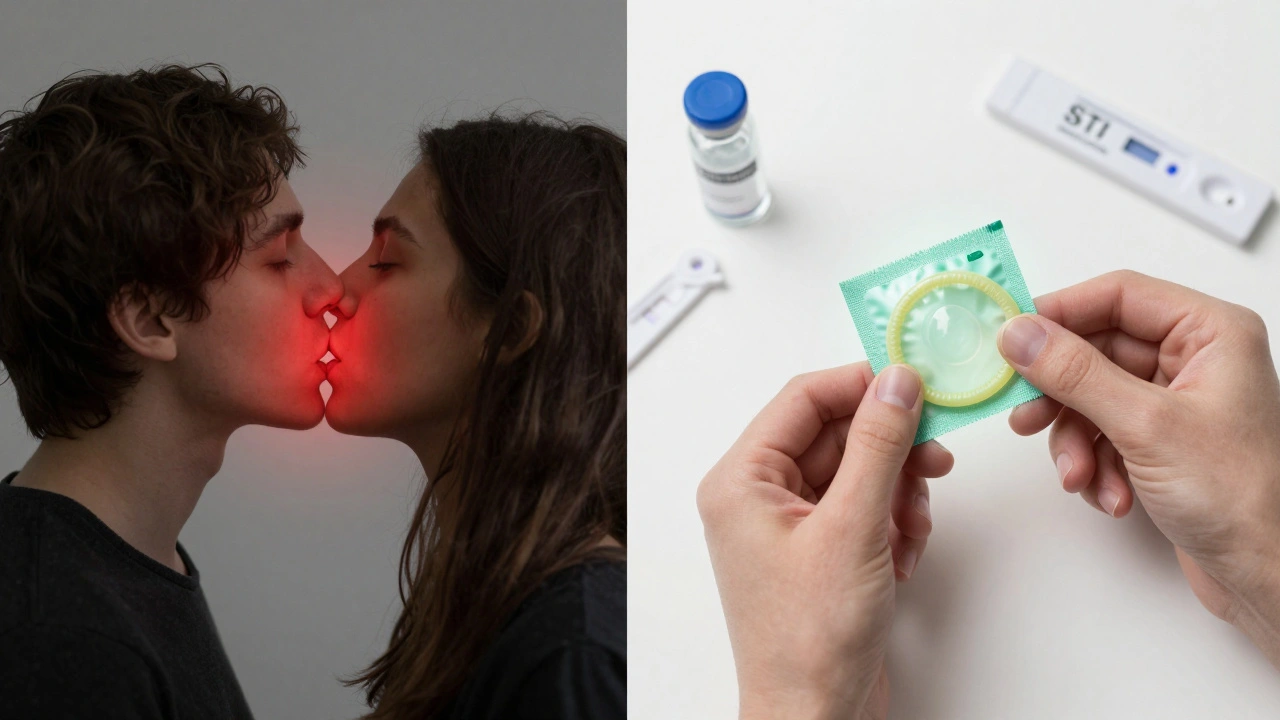
Comparison: Oral Sex With vs. Without Protection
| Factor | With Protection | Without Protection |
|---|---|---|
| STI Transmission Risk | Reduced by 80-90% | High-especially for gonorrhea, chlamydia, herpes, HPV |
| HPV Exposure | Minimal if vaccinated + barrier used | Significant-increases throat cancer risk over time |
| Convenience | Easy-flavored condoms and dams available | Zero effort, but high long-term cost |
| Partner Trust | Builds mutual respect and communication | Assumes health status-risky |
| Long-Term Health Impact | Minimal | Potential for chronic infection, infertility, cancer |
Frequently Asked Questions
Can you get HIV from oral sex?
Yes-but it’s rare. The risk is highest if you have cuts or sores in your mouth, your partner has a high viral load, or they’re ejaculating in your mouth. For most people, the risk is lower than vaginal or anal sex. Still, it’s not zero. Using a condom eliminates this risk entirely.
Do dental dams really work?
Yes. Studies show they reduce transmission of STIs like herpes and HPV during oral-vaginal and oral-anal contact. They’re not perfect, but they’re far better than nothing. If you find them uncomfortable, try flavored ones or use a condom cut open lengthwise. The goal is barrier protection-not perfection.
Can you get an STI from kissing?
Yes, but only if there’s direct contact with an open sore or infected fluid. HSV-1 (oral herpes) is commonly spread through kissing. Hepatitis B can also be transmitted through saliva if there’s blood involved. Deep kissing with bleeding gums increases risk. Otherwise, casual kissing is very low risk.
Is oral sex safer than vaginal sex?
In terms of HIV risk, yes-oral sex carries much lower risk. But for other STIs like gonorrhea, chlamydia, and HPV, the risk is similar, especially without protection. You can’t assume oral sex is "safe sex." Safe sex means using protection, getting tested, and communicating with your partner.
If I’m in a monogamous relationship, do I still need protection?
Only if you’ve both been tested recently and confirmed you’re STI-free. Many people carry STIs without symptoms for years. If either of you had previous partners, or if you’re unsure about past exposure, testing is still essential. Trust is great-but testing is better.
Are flavored condoms safe for oral sex?
Yes-as long as they’re latex or polyurethane and meant for sexual use. Avoid condoms with added sugars or glycerin if you’re using them for oral-vaginal contact, as these can cause yeast infections. Stick to reputable brands and check the label.
What to Do Next
If you’ve had unprotected oral sex in the past, don’t panic. But do this: get tested. Talk to your partner. Start using protection. Consider the HPV vaccine if you haven’t already. And if you’re unsure how to bring up safer sex-just say it plainly: "I care about us both being healthy. Can we use protection?"Sex doesn’t have to be risky to be intimate. The best connections are built on trust, communication, and care-for yourself and for each other.