
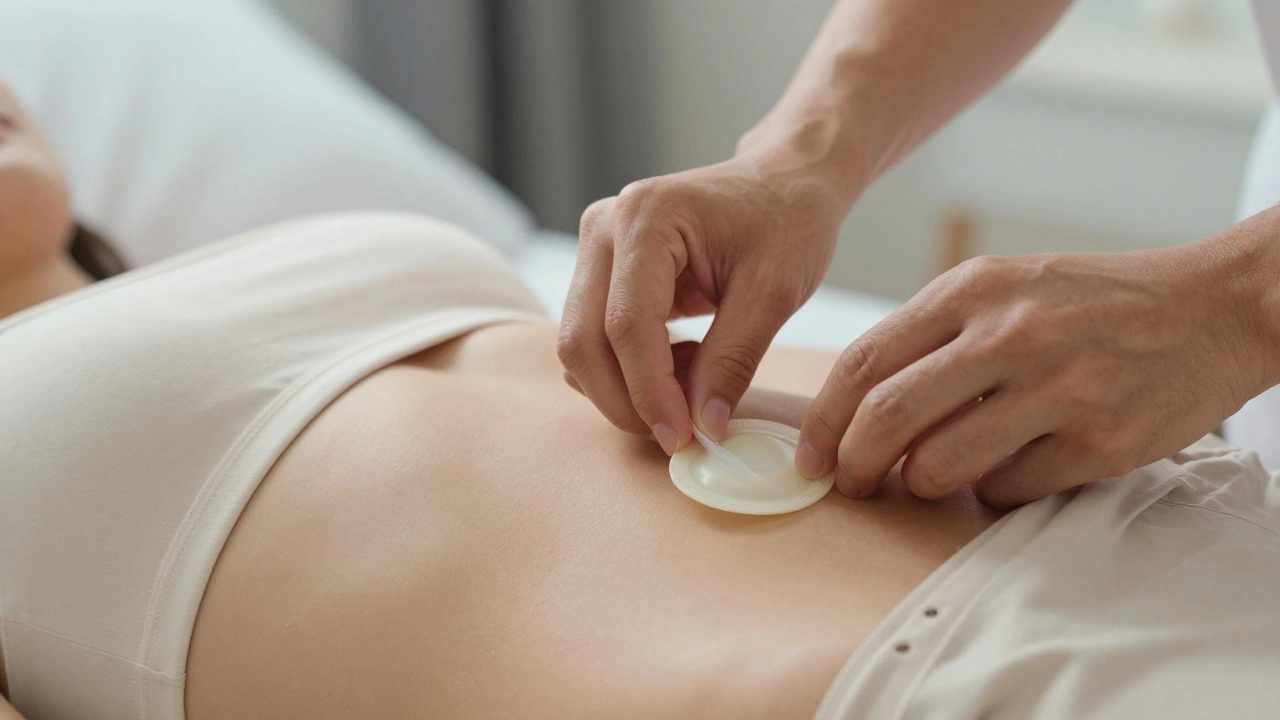
You’ve heard the myths: "Oral sex is safe," "You can’t catch anything that way," "It’s just saliva." But here’s the truth-oral sex without protection isn’t risk-free. Not even close. And if you’re doing it, you need to know what you’re up against-and how to protect yourself.
Key Takeaways
- STIs like gonorrhea, chlamydia, herpes, and HPV can spread through oral sex-even without ejaculation.
- HIV transmission through oral sex is rare, but not impossible, especially with cuts, sores, or bleeding gums.
- Dental dams and condoms are effective, simple tools that reduce risk dramatically.
- Regular STI testing is non-negotiable if you’re sexually active, regardless of the type of sex you’re having.
- Communication with your partner about testing and protection isn’t awkward-it’s essential.
What You Need to Know About Oral Sex Without Protection
People often think oral sex is harmless because it doesn’t lead to pregnancy. But that’s like saying a car crash is fine because you didn’t hit a tree. Just because the outcome isn’t what you expect doesn’t mean there’s no danger.When you perform or receive oral sex without a barrier-whether it’s a condom on the penis or a dental dam over the vulva or anus-you’re exchanging bodily fluids. That includes saliva, pre-cum, semen, vaginal fluid, and even blood if there’s any irritation or micro-tears.
Here’s what can actually pass through:
- Gonorrhea: Can infect the throat. Often symptom-free, but can cause sore throat, difficulty swallowing, or nothing at all.
- Chlamydia: Also thrives in the throat. Like gonorrhea, it’s silent in most cases but can spread to others.
- Herpes (HSV-1 and HSV-2): HSV-1 (cold sores) is commonly passed through kissing, but can also be transmitted to the genitals via oral sex. HSV-2 (genital herpes) can infect the mouth.
- HPV: Human papillomavirus is linked to throat and oral cancers. The CDC says HPV is the most common STI in the U.S., and oral transmission is rising.
- Syphilis: Can cause sores in the mouth or on the lips. Easily missed because they’re painless.
- HIV: The risk is low compared to vaginal or anal sex, but it’s not zero. If you have cuts in your mouth, gum disease, or your partner has a high viral load, transmission becomes possible.
And here’s the kicker: many people don’t know they have these infections. You can feel fine and still be contagious. That’s why assuming your partner is "clean" based on how they look or what they say is a gamble you shouldn’t take.
Why This Matters More Than You Think
In 2024, the UK Health Security Agency reported a 45% increase in throat gonorrhea cases among young adults in London over the past five years. Most of those cases were linked to unprotected oral sex. And it’s not just London-similar spikes are happening in New York, Sydney, Berlin, and Toronto.Why now? Because people aren’t talking about it. Condoms are talked about for vaginal and anal sex. But when it comes to oral? Silence. And silence kills.
Think about this: if you’ve had oral sex without protection in the last year, you’re at higher risk for throat infections than you are for catching a cold. And unlike a cold, these infections don’t go away on their own. Left untreated, they can lead to chronic pain, infertility, or even cancer.
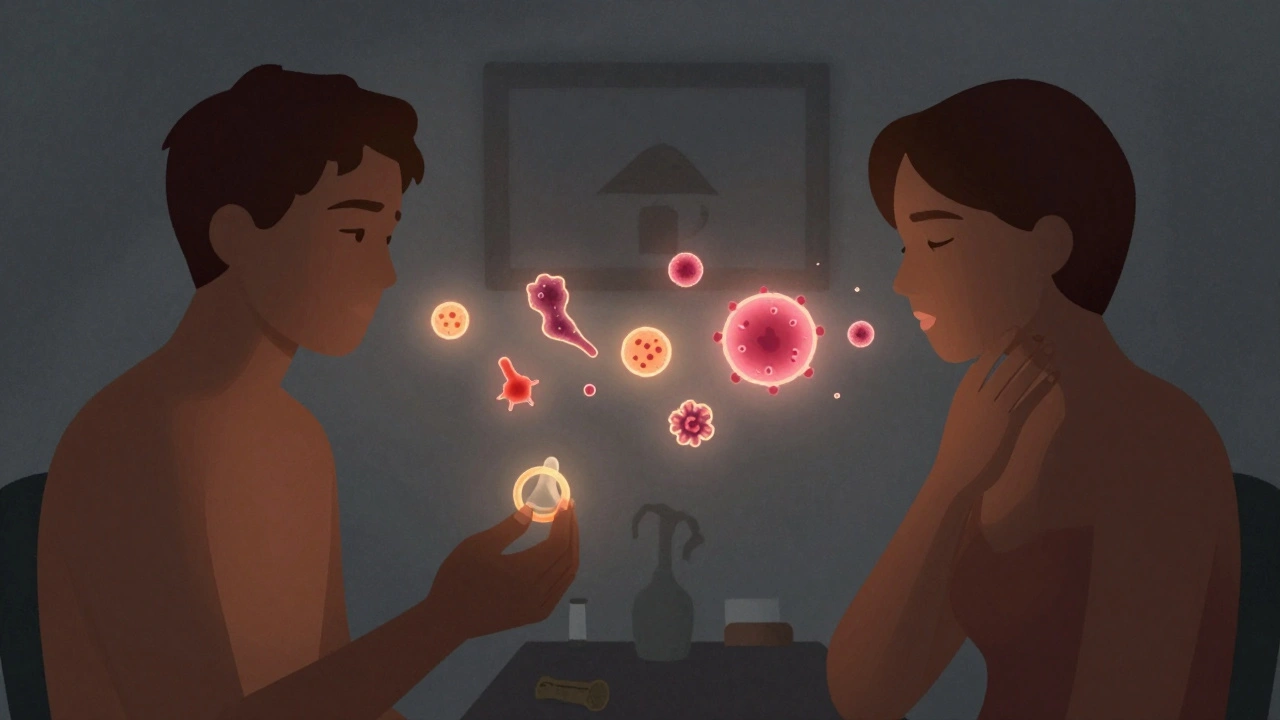
How to Stay Safe: Real, Practical Steps
You don’t need to stop having oral sex. You just need to do it smarter.- Use a condom-yes, even for oral. A regular latex or polyurethane condom works perfectly on the penis. No need for "oral-specific" ones. Just unroll it like you would for vaginal sex.
- Use a dental dam for oral-vaginal or oral-anal contact. These are thin latex or polyurethane sheets designed for this. You can buy them online or at pharmacies. If you can’t find one, cut a condom open lengthwise to make a flat square. It’s not ideal, but it’s better than nothing.
- Get tested regularly. If you’re sexually active, get tested for STIs every 3-6 months. Include throat swabs if you’ve had oral sex. Many clinics offer this now-don’t assume they only test blood or urine.
- Know your partner’s status. Ask. Don’t guess. Say: "Have you been tested recently? Can we share results?" If they say no, that’s your answer. You don’t need to be rude. You just need to be clear.
- Avoid oral sex if either of you has sores, cuts, or bleeding gums. Even a tiny cut in your mouth can be a highway for viruses.
- Brush and floss after, not before. Brushing right before oral sex can create micro-tears in your gums. Do it after, when you’re done.
What’s the Real Risk? A Quick Breakdown
Let’s be real: no one wants to hear "you could get cancer." But facts aren’t scary because they’re bad-they’re scary because they’re ignored.
Here’s what the data says about risk per act:
| STI | Transmission Risk (Receiving Oral) | Transmission Risk (Performing Oral) |
|---|---|---|
| Gonorrhea | 1-5% | 1-3% |
| Chlamydia | 0.5-2% | 0.5-2% |
| Herpes (HSV-1/2) | 5-10% | 3-8% |
| HPV (oral) | 1-5% | 2-7% |
| Syphilis | 1-4% | 1-3% |
| HIV | 0.01% | 0.005% |
These numbers might seem low-but remember, you’re not doing this once. You’re doing it over and over. Multiply those percentages by 10, 20, 50 acts, and suddenly the risk isn’t "low." It’s real.
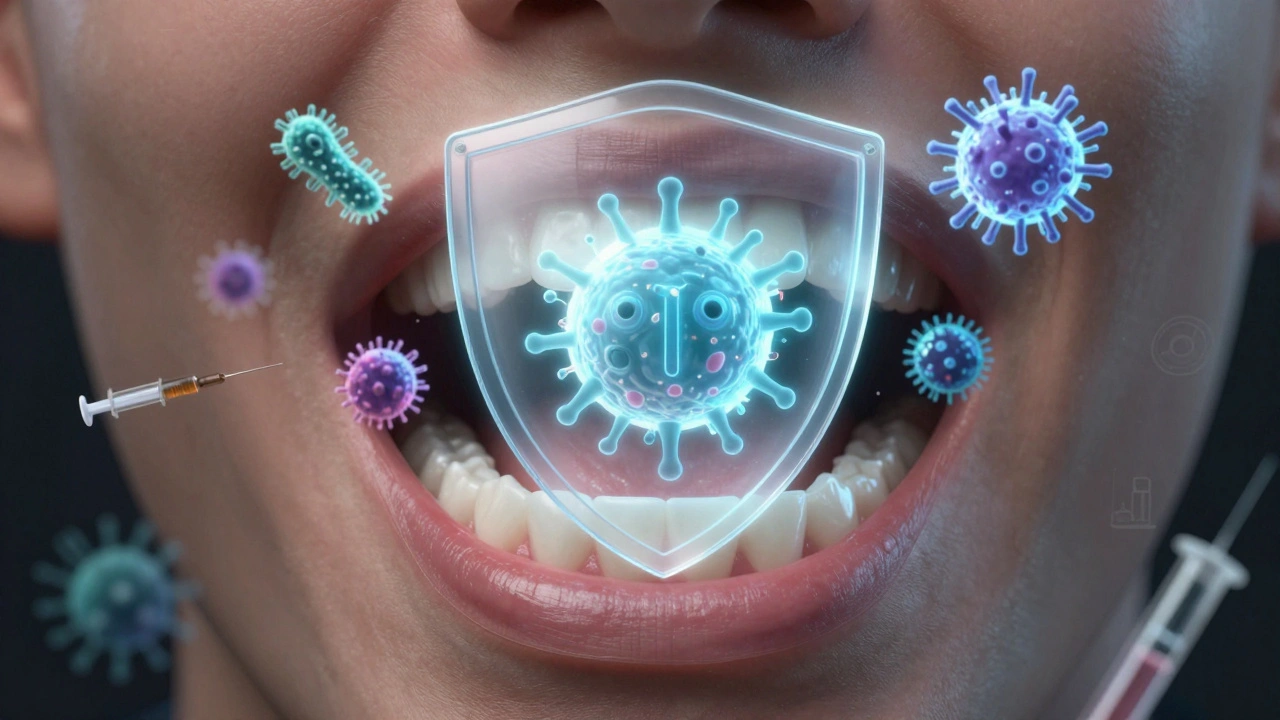
What to Do If You’ve Already Had Unprotected Oral Sex
Don’t panic. But do act.
- Get tested in 2-4 weeks. Some infections take time to show up.
- Don’t have sex with anyone else until you know your status.
- Watch for symptoms: sore throat, unusual discharge, pain during swallowing, sores on lips or genitals.
- Even if you feel fine, get tested anyway. Most STIs have no symptoms.
Free clinics in London, like the ones run by the NHS, offer confidential STI testing with no ID required. You don’t need to be registered with a GP. Just walk in.
FAQ: Your Questions About Oral Sex Without Protection Answered
Can you get HIV from oral sex without a condom?
Yes, but it’s extremely rare. The risk is higher if you have open sores in your mouth, bleeding gums, or if your partner has a high viral load or is not on treatment. Still, the odds are about 1 in 10,000 per act. That’s why it’s not the biggest concern-but it’s not zero. Using a condom removes the risk entirely.
Do dental dams really work?
Yes. Studies show dental dams reduce transmission of STIs like herpes and HPV by up to 80% during oral-vaginal and oral-anal contact. They’re not 100% foolproof, but they’re the only barrier available for these acts. If you’re uncomfortable with them, cut a condom into a flat sheet. It works just as well.
Is it safe to perform oral sex if I have a cold sore?
No. Cold sores are caused by HSV-1, and you can pass them to your partner’s genitals. That can lead to genital herpes, which is lifelong. Wait until the sore is completely gone-no scab, no redness, no tingling. And even then, use protection if you’re unsure.
Can you get an STI from kissing?
Yes. Herpes (HSV-1) is the most common. Syphilis and gonorrhea can also spread through deep kissing if there’s an open sore or infection in the mouth. It’s not just oral sex that’s risky-it’s any exchange of saliva when someone has an active infection.
Do I need to get tested if I only do oral sex?
Absolutely. Many clinics offer throat swabs specifically for people who have oral sex. If you don’t get tested, you could unknowingly spread infections to future partners. STIs don’t care how you had sex-they only care if you had unprotected contact.
Final Thought: Protection Isn’t About Trust-It’s About Responsibility
You don’t have to be scared of oral sex. But you do have to be smart. Sex doesn’t have to be risky to be good. In fact, the best sex happens when both people feel safe, respected, and informed.
Next time you’re about to go down, ask yourself: "Do I want to risk my health for a few minutes?" If the answer is no, grab a condom. Or a dental dam. Or just say, "Let’s wait until we’re both tested."
That’s not boring. That’s mature. That’s how you take care of yourself-and the people you care about.





Piotr Williams
February 7, 2026 AT 13:52Let’s be real-oral sex isn’t ‘safe’? Who decided that? I’ve been doing it for years, no condoms, no dams, and I’m fine. You’re scaremongering. If you’re not sick, you’re not sick. End of story.
Matt H
February 8, 2026 AT 15:31Here’s the clinical reality: mucosal transmission of STIs via oral routes is underreported because asymptomatic carriage is the norm-not the exception. Gonorrhea and chlamydia in the oropharynx are silent vectors; they don’t present with classic symptoms, but they’re perfectly capable of seeding systemic infections or facilitating HIV co-transmission. Dental dams aren’t ‘awkward’-they’re bioengineered risk mitigation tools. And yes, HPV-16 seroconversion via oral exposure is now a leading etiology of oropharyngeal squamous cell carcinoma in men under 40. This isn’t fear-mongering-it’s epidemiology.
Ashok Sahu
February 8, 2026 AT 23:04As someone from India, I’ve seen how silence around this topic leads to real harm. In my village, people think oral sex is ‘not real sex,’ so no one gets tested. But we have rising cases of throat gonorrhea in urban clinics. I’ve told my friends: use a condom, get tested every 6 months. It’s not about shame-it’s about respect. For yourself. For your partner. Simple. No drama.
Vincent Jackson
February 8, 2026 AT 23:58Yea but like… dental dams? I’ve never seen one in real life. Where do you even buy them? Like, is it at CVS next to the lube? Or do you have to order them online? And if you cut a condom open, does it just fall apart? I’m not trying to be dumb, but I need visuals. Maybe someone should make a TikTok tutorial. #DentalDamTutorial #SexEdMatters
Jason Hancock
February 9, 2026 AT 07:19LOL so now we’re treating oral sex like a biohazard? Next you’ll say kissing is a pandemic risk. HIV risk is 0.005%? That’s less than getting struck by lightning. You’re turning sex into a checklist of paranoia. I’ve had unprotected oral with 20+ partners and never gotten anything. Coincidence? Nah. It’s called biology. Not everyone’s a walking STI factory.
Jill Norlander
February 9, 2026 AT 19:42While the intent of this article is commendable, the tone is alarmist and potentially counterproductive. By framing all unprotected oral sex as inherently dangerous, it risks alienating those who might otherwise engage in responsible sexual behavior. A more nuanced approach-emphasizing individual risk factors and mutual consent-would be more effective than blanket warnings. Also, the table lacks confidence intervals. Scientifically, this is sloppy.
Lynn Andriani
February 11, 2026 AT 03:29ok but i just wanna say… i used to think dental dams were for, like, 1950s hippies? then i tried one and it was fine? like, i cut a condom into a square, put it on, and honestly? it felt kinda nice? weird? but not weird-bad. just… different. and my partner said they liked it. so maybe try it? not saying you have to, but… maybe? :)
Priyam Mittal
February 11, 2026 AT 14:34Brooo, this is fire!! 🔥 I just got tested last week and they did a throat swab-never even knew that was a thing! I’m getting my squad to do the same. If you’re having oral, you’re getting tested. Period. No excuses. And yeah, dental dams? I use them with my GF. She says it feels like a spa day for her nether regions 😆 Just don’t overthink it-get the damn thing, use it, move on. Stay safe, stay smart!
Jess Williams
February 13, 2026 AT 04:24There’s something deeply human here-beyond the statistics, beyond the condoms, beyond the swabs. It’s about how we treat each other in moments of intimacy. We say ‘trust’ when we mean ‘hope.’ We say ‘it’s fine’ when we mean ‘I’m scared.’ The real risk isn’t the virus-it’s the silence. The assumption that because it’s ‘just oral,’ it doesn’t matter. But it does. Every time. Because bodies matter. And so do the people inside them. A dental dam isn’t a barrier to pleasure-it’s a bridge to care. And that? That’s worth more than any myth.