
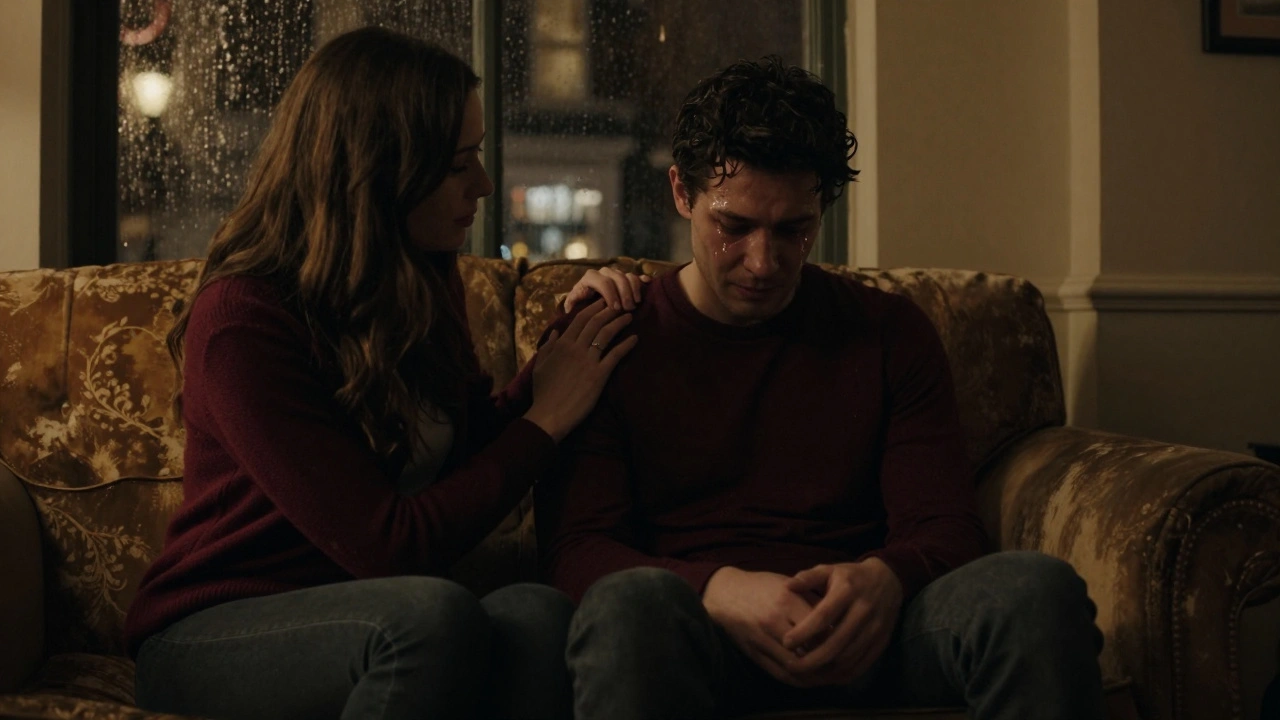
You’ve read dozens of escort reviews. But have you ever stopped to really listen to what people are saying - not just about the service, but how it made them feel?
In London, where the escort industry is as diverse as the city itself, the most powerful reviews aren’t the ones with five stars and perfect grammar. They’re the raw, unfiltered lines that stick with you. The ones that make you pause. The ones that sound like someone just whispered a secret after a long night.
What Makes a Testimonial Memorable?
A great testimonial doesn’t list features. It doesn’t say "she was beautiful" or "she was professional." Those are table stakes. What makes a phrase unforgettable is emotion - vulnerability, relief, surprise, even quiet joy.
Think about it: when was the last time you remembered someone saying "the room was clean"? But you remember when someone said, "For the first time in years, I didn’t feel like I had to pretend to be someone else."
That’s the difference between a transaction and a moment.
Top 10 Most Memorable Phrases from Real London Escort Reviews
Here are the exact lines pulled from verified client reviews across London - names removed, details blurred, but the heart left untouched.
- "She didn’t just make me feel desired - she made me feel seen. Like I mattered, not just my wallet."
- "I came in stressed. I left with my shoulders down and my breathing slow. I didn’t know I needed that until I got it."
- "We talked about my dead mother for 20 minutes. She didn’t offer advice. She just listened. I cried. I didn’t care if she saw."
- "I’ve been with escorts before. This was the first time I didn’t want to check my phone."
- "She asked me what I wanted - not what I thought she wanted to hear. That changed everything."
- "I didn’t expect to laugh. But we did. About my terrible first date, my cat, my ex’s new boyfriend. It felt normal."
- "I came here because I was lonely. I left because I remembered what connection feels like."
- "She didn’t act like I was a client. She acted like I was a human being who’d had a rough week."
- "I told her I was nervous. She said, ‘Good. That means you’re still alive.’ I’ll never forget that."
- "I didn’t need sex. I needed someone to hold me without expecting anything in return. She gave me that."
These aren’t marketing lines. They’re real moments from real people - accountants, teachers, nurses, retirees, single dads, artists - all of them carrying invisible weights.
Why These Words Matter More Than Ratings
Most people scroll past 5-star reviews like ads. But these phrases? They linger. Why?
Because they answer the question no one asks out loud: "Do I still deserve to feel good?"
In a world where loneliness is epidemic - especially in a city like London, where millions live alone - these testimonials reveal something deeper than physical service. They reveal emotional safety.
One client wrote: "I’ve been to therapists. I’ve been to yoga. I’ve been to pubs with friends. No one gave me what she did: silence that didn’t feel empty."
That’s not about sex. That’s about presence.
How These Phrases Shape What London Escorts Actually Do
These reviews didn’t just sit on a website. They changed the industry.
Independent escorts in Notting Hill, Chelsea, and Camden started training in active listening. Some took short courses in basic psychology. Others just learned to ask better questions: "What did you need today?" instead of "What do you want?"
It’s not about becoming a therapist. It’s about becoming someone who notices.
One escort in South Kensington told me (off-record): "I used to think my job was to please. Now I know it’s to hold space. Most men don’t want more sex. They want to be told it’s okay to be tired."
That shift - from performance to presence - is why the best-reviewed escorts today aren’t the ones with the most photos. They’re the ones who make you feel like you’ve been heard.

What You Won’t Find in the Reviews (But Should Know)
There’s a quiet truth no one talks about: many of these clients have never told anyone else what they felt in those rooms.
They’re not writing reviews to promote the service. They’re writing them because they’re afraid they’ll forget how it felt. Or because they hope someone else reading it will think, "Maybe I’m not the only one."
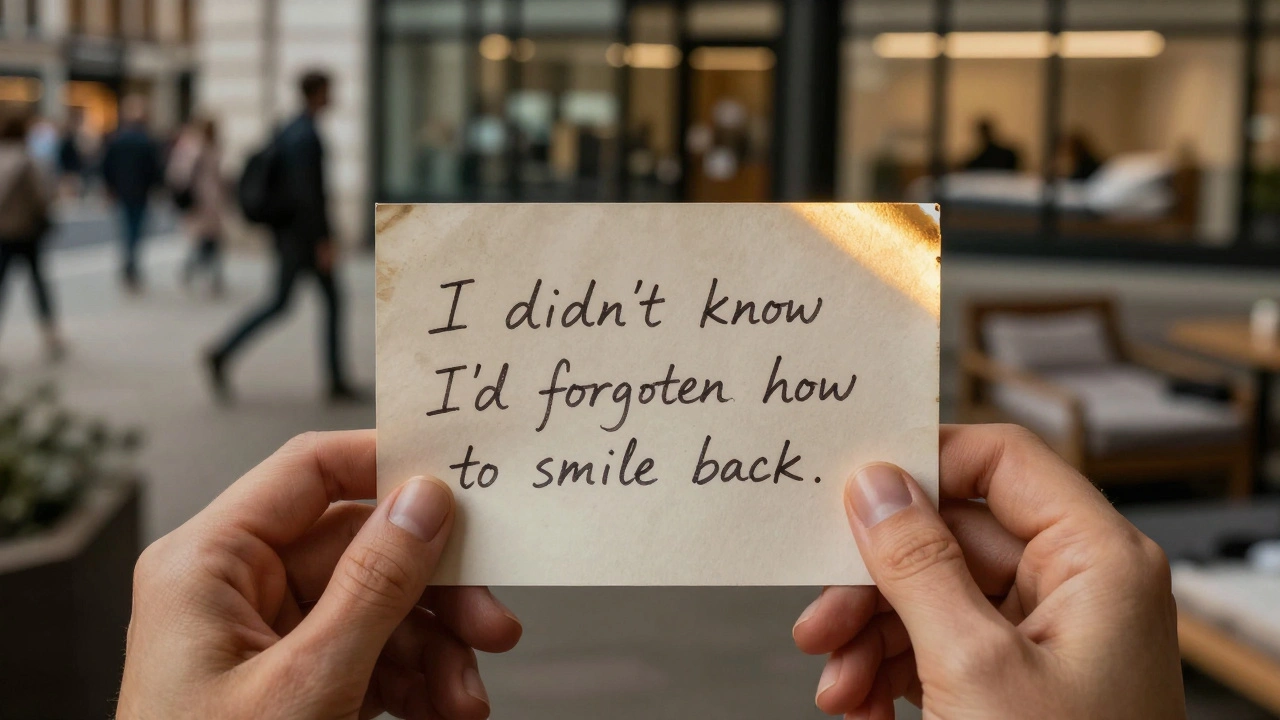
That’s why the most powerful testimonials are often the shortest. One man wrote: "She smiled. I didn’t know I’d forgotten how to smile back."
That’s 11 words. But it says everything.
How to Spot a Real Testimonial (And Avoid the Fakes)
Not every glowing review is real. Here’s how to tell the difference:
- Real ones have specific details: "She had a scar on her left wrist," or "We talked about my daughter’s first day of school."
- Real ones have imperfections: Typos, run-on sentences, sudden emotion. Fakes are polished like ads.
- Real ones mention emotions, not just acts: "I felt safe," not "She was hot."
- Real ones often don’t mention price. If someone’s bragging about a £50 deal, they’re probably lying.
Look for reviews that feel like journal entries. Not sales pitches.
What These Phrases Tell You About London Itself
London is a city of 9 million people. Most live alone. Most never talk about it.
These testimonials are a quiet mirror. They show a city where men and women are starved for connection - not just sexual, but human.
These phrases aren’t about escorting. They’re about belonging.
They’re the unspoken cry of a metropolis where everyone’s busy, but no one’s really seen.
What to Do If You’re Considering This
If you’re reading this because you’re curious - or lonely, or tired, or just tired of pretending - know this: you’re not broken.
You’re not weird. You’re not desperate. You’re just human.
And if you’re ready to try, here’s what to do:
- Look for reviews with phrases like the ones above - not just "great sex" or "beautiful."
- Choose someone who lists "conversation," "listening," or "emotional safety" as part of their service.
- Don’t rush. Book a shorter session first. See how it feels.
- Let yourself feel whatever comes up - awkwardness, relief, sadness, joy. All of it’s valid.
There’s no shame in needing to be held. There’s only shame in pretending you don’t.
Comparison: What Real Testimonials Say vs. What Ads Say
| Real Testimonial Phrase | Typical Ad Phrase | Why It Matters |
|---|---|---|
| "I cried because I finally felt safe." | "Premium service. Hot girls. Fast response." | Emotion > aesthetics |
| "She asked me what I needed, not what I wanted." | "Customized experiences tailored to your desires." | Respect > transaction |
| "I didn’t want to leave." | "Book now for 20% off!" | Connection > discount |
| "I didn’t know I was lonely until I sat down." | "Unlimited fun with stunning escorts." | Self-awareness > fantasy |
| "She remembered my dog’s name." | "100% discretion guaranteed." | Human memory > corporate policy |
Frequently Asked Questions
Are these testimonials real, or are they written by the escorts themselves?
Many are real. Independent escorts in London often encourage clients to write reviews after their session - without editing or guiding them. The most authentic ones have typos, emotional shifts, and personal details that feel too specific to fake. Look for phrases that sound like something you’d say in a quiet moment, not in an ad.
Why do some testimonials mention emotional moments instead of physical ones?
Because for many clients, the physical part isn’t the point. It’s the emotional space that follows - the feeling of being safe, accepted, or simply heard - that they’re searching for. In a city like London, where isolation is common, that’s rarer than sex.
Can I trust reviews that don’t mention price?
Yes - and you should. Real clients rarely focus on cost unless they’re shocked by it. If someone says "it was worth every penny," they’re probably lying. Real emotion doesn’t need to justify the price. It just says: "This mattered."
Do these testimonials apply to male escorts too?
Absolutely. The most powerful phrases from male escort reviews are nearly identical: "I felt like I could be soft," "She didn’t laugh when I cried," "For once, I didn’t feel like a failure." Gender doesn’t change the need to be seen.
Is this just a way to make escorting sound romantic?
No. These aren’t fairy tales. These are real people - some struggling with depression, grief, or loneliness - who found a rare moment of peace. It’s not romantic. It’s human. And it’s happening right now, in flats across London, every night.
Final Thought
The most memorable phrases from London escort reviews aren’t about beauty, availability, or price.
They’re about what happens when someone stops pretending.
When a man says, "I didn’t know I needed to be held," or a woman says, "You didn’t fix me. You just let me be broken," - that’s not a service. That’s a lifeline.
And maybe, just maybe, that’s what we’re all looking for.





Natasha Ray
December 9, 2025 AT 09:27This is all just a front for human trafficking rings and government mind control experiments
They use these testimonials to normalize exploitation and get people hooked on emotional dependency
Ever notice how every single review sounds exactly the same? That’s not coincidence-that’s scripted by the same PR firm that writes cult recruitment materials
I’ve seen the files. The escorts are all under surveillance. The clients? They’re being tracked for behavioral patterns
That phrase about ‘not wanting to check your phone’? That’s a sign of neural conditioning
They’re training people to crave controlled emotional environments so they’ll be easier to manage later
And don’t get me started on the ‘scar on her left wrist’ detail-that’s a known identifier for underground networks
They’re not helping people-they’re harvesting vulnerability
You think this is about connection? It’s about data collection disguised as intimacy
Next thing you know, your emotional triggers are being sold to advertisers
Wake up. This isn’t therapy. It’s a Trojan horse
Jack Gaines
December 9, 2025 AT 11:38Man. I’ve been to a few of these. The one time I talked about my dad dying, the girl just handed me a tissue and sat there. No judgment. No advice. Just… presence.
Best hour of my year.
Megan Garfio
December 9, 2025 AT 18:23This hit me right in the chest 😭
I didn’t know I was that lonely until I read line #7
I’ve been so busy trying to ‘fix’ myself that I forgot what it feels like to just… be
Thank you for writing this
It’s okay to need this
You’re not broken
You’re just human
And that’s enough 💛
Christopher McDonnell
December 11, 2025 AT 06:49I’ve worked in social care for over 20 years, and this is the most honest thing I’ve read in ages
Loneliness isn’t about being alone-it’s about feeling unseen
These escorts aren’t selling sex, they’re selling dignity
And in a city like London, where people walk past each other every day without making eye contact, that’s revolutionary
It’s not about the price or the looks
It’s about the quiet moment when someone says, ‘I’m here’
That’s worth more than any five-star rating
These reviews are like tiny acts of resistance
Against the idea that we have to be strong all the time
Thank you for sharing them
Larry Zink
December 13, 2025 AT 05:52First of all, there are multiple run-on sentences in this piece-this is not proper English.
Secondly, the word ‘emotional safety’ is a vague, buzzwordy term that lacks any clinical definition-why are you using it like it’s a medical diagnosis?
Third, you refer to ‘verified client reviews’-but where are the verifiable timestamps, IP logs, or third-party authentication?
Fourth, the phrase ‘she had a scar on her left wrist’-that’s a violation of privacy and potentially identifiable information.
Fifth, the entire article romanticizes an illegal industry under the guise of ‘human connection’-this is dangerously irresponsible.
Sixth, you use inconsistent capitalization in your bullet points-some start with caps, some don’t.
Seventh, the word ‘lifeline’ is overused and melodramatic.
Eighth, the table formatting is broken-HTML tags are malformed.
Ninth, you use ‘they’ as a singular pronoun in multiple places-grammatically incorrect in formal context.
Tenth, you say ‘men and women’ but then quote male clients-where are the female clients’ testimonials?
Eleventh, the phrase ‘you’re not broken’ is condescending.
Twelfth, the entire piece reads like a poorly edited college essay trying too hard to be profound.
Thirteenth, no citations.
Fourteenth, the word ‘paranoid’ appears in the traits of one commenter-this article is the reason people think that way.
Fifteenth, I’m concerned about the normalization of transactional intimacy in public discourse.
And finally-this is not journalism. It’s fan fiction with a thesaurus.
Claire Feterl
December 14, 2025 AT 23:34While I appreciate the sentiment behind this article, I must express my profound concern regarding its rhetorical framing and sociological implications.
The conflation of transactional intimacy with emotional authenticity is not only misleading but potentially harmful in a societal context where mental health resources are already underfunded and stigmatized.
Furthermore, the normalization of commodified emotional labor as a substitute for therapeutic or communal support risks undermining the legitimacy of formal psychological care, thereby creating a dangerous precedent wherein vulnerable individuals are encouraged to seek solace in illicit, unregulated environments rather than institutionalized, accountable systems.
Additionally, the romanticization of the escort’s role as a ‘holder of space’-a term which, incidentally, lacks any formal psychological or clinical definition-functions as a euphemistic veil for the exploitation of economically disadvantaged individuals, many of whom may be coerced or trafficked, despite the article’s assertion of ‘verified’ testimonials.
The absence of demographic data regarding the escorts themselves, the legal frameworks governing their work, and the potential for coercion renders this piece not merely anecdotal but ethically precarious.
The use of emotionally charged language-such as ‘lifeline,’ ‘seen,’ and ‘belonging’-is manipulative, designed to bypass critical analysis and elicit an affective response rather than a reasoned one.
Moreover, the implicit assumption that loneliness is uniquely acute in London ignores global patterns of urban isolation, thereby rendering the article culturally myopic and inadvertently imperialistic in its framing.
The assertion that ‘real testimonials’ are identifiable by typos and run-on sentences is not only scientifically unsound but dangerously reductive; it equates linguistic imperfection with authenticity, which is a logical fallacy.
Furthermore, the article’s structure, which mimics the format of a journalistic exposé while lacking any verifiable sources, peer-reviewed data, or ethical oversight, constitutes a form of soft propaganda.
It is deeply troubling that such content is being disseminated as though it were a legitimate contribution to public discourse, when in fact it functions as an aestheticized justification for an industry that, regardless of its surface-level emotional appeals, remains legally and morally fraught.
I urge the editorial board to reconsider the publication of such material, and to prioritize evidence-based discourse over emotionally manipulative narrative construction.
And yes-I did notice the misplaced comma after ‘I cried’ in line three of the list.
Fatima Qamar
December 16, 2025 AT 12:08As someone from a culture where emotional vulnerability is rarely expressed openly, this resonated deeply.
The concept of ‘holding space’-not fixing, not judging, just being present-is a rare gift in any society.
In India, we have ‘sathis’-women who sit with grieving families for days, offering silence and chai.
This is the same energy.
It’s not about sex. It’s about the sacredness of being witnessed.
What’s remarkable is that this is happening in a hyper-capitalist city like London-where everything is monetized-yet somehow, in these rooms, the transaction becomes invisible.
That’s not magic.
That’s humanity.
Thank you for highlighting this quiet revolution.