
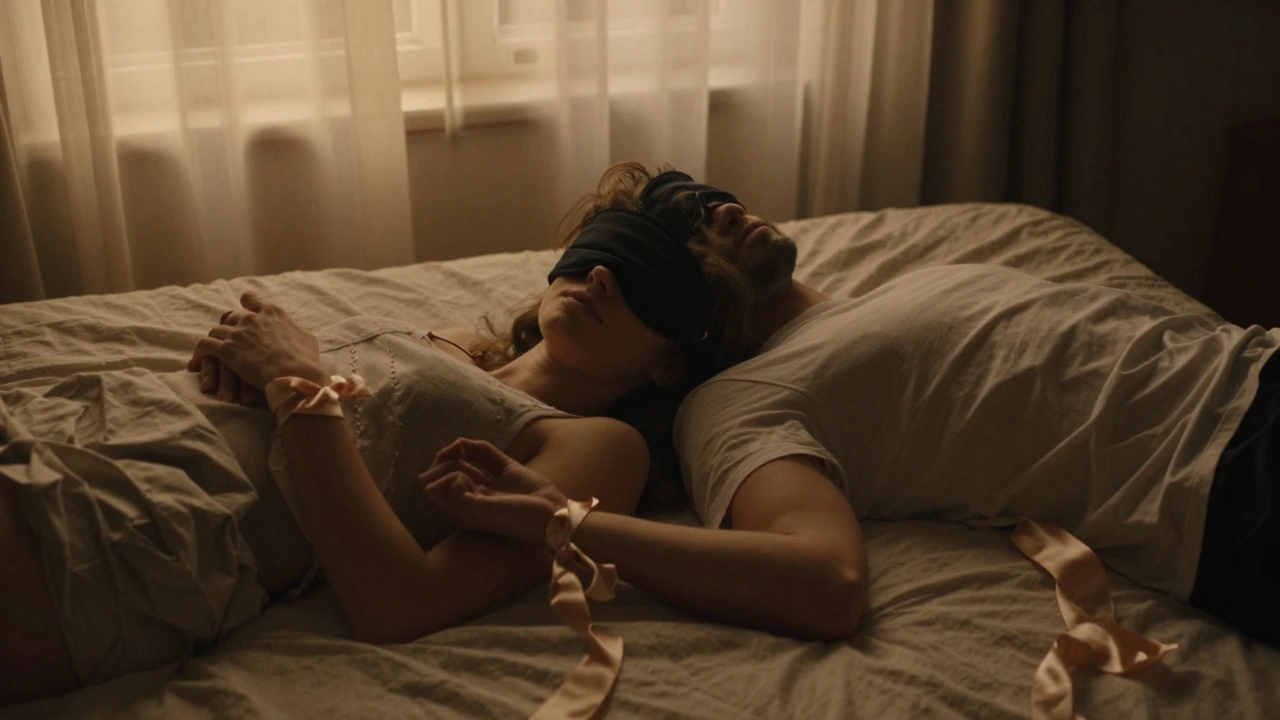
You’ve probably seen bondage in movies or online-hands tied, silk ropes, the quiet hum of tension in the air. But real-life bondage? It’s not about drama. It’s about trust, communication, and control-given and received. If you’re curious about trying it, you’re not alone. More people are exploring bondage not as a fantasy, but as a way to deepen connection, release stress, or simply feel something different. The key? Doing it safely. Because without safety, even the most beautiful experience can turn dangerous.
What Bondage Really Is (And Isn’t)
Bondage isn’t just about tying someone up. It’s a practice of consensual restraint-using ropes, cuffs, chains, or even scarves-to limit movement for pleasure, sensation, or psychological release. It’s not punishment. It’s not about power over someone. It’s about surrender and trust. When done right, it can feel like floating in a warm bath-completely safe, deeply relaxed, and strangely empowering.
Many people assume bondage is only for hardcore BDSM scenes. That’s a myth. You don’t need leather, whips, or a dungeon. A simple pair of cotton wrist cuffs and a quiet bedroom are enough to start. What matters isn’t the gear-it’s the mindset.
Why People Try Bondage
People don’t try bondage for the same reason. Some want to feel completely safe while giving up control. Others love the thrill of being restrained-how their body tingles when they can’t move. Some use it to quiet their overthinking mind. One woman I spoke to said, “After a long week of managing everything, being tied up felt like someone else was finally in charge.”
Studies from the Journal of Sexual Medicine show that consensual bondage can reduce stress hormones like cortisol and increase oxytocin-the bonding hormone. That’s why many couples report feeling closer after trying it. It’s not about sex, necessarily. It’s about presence. Being fully in the moment, with no distractions.
Types of Bondage You Can Try
There’s no one-size-fits-all. Here are the most common, beginner-friendly styles:
- Soft restraints-silk scarves, fleece cuffs, or padded wristbands. Gentle, easy to remove, and perfect for first-timers.
- Shackles and cuffs-metal or leather with quick-release buckles. More secure, but still safe if you know how to use them.
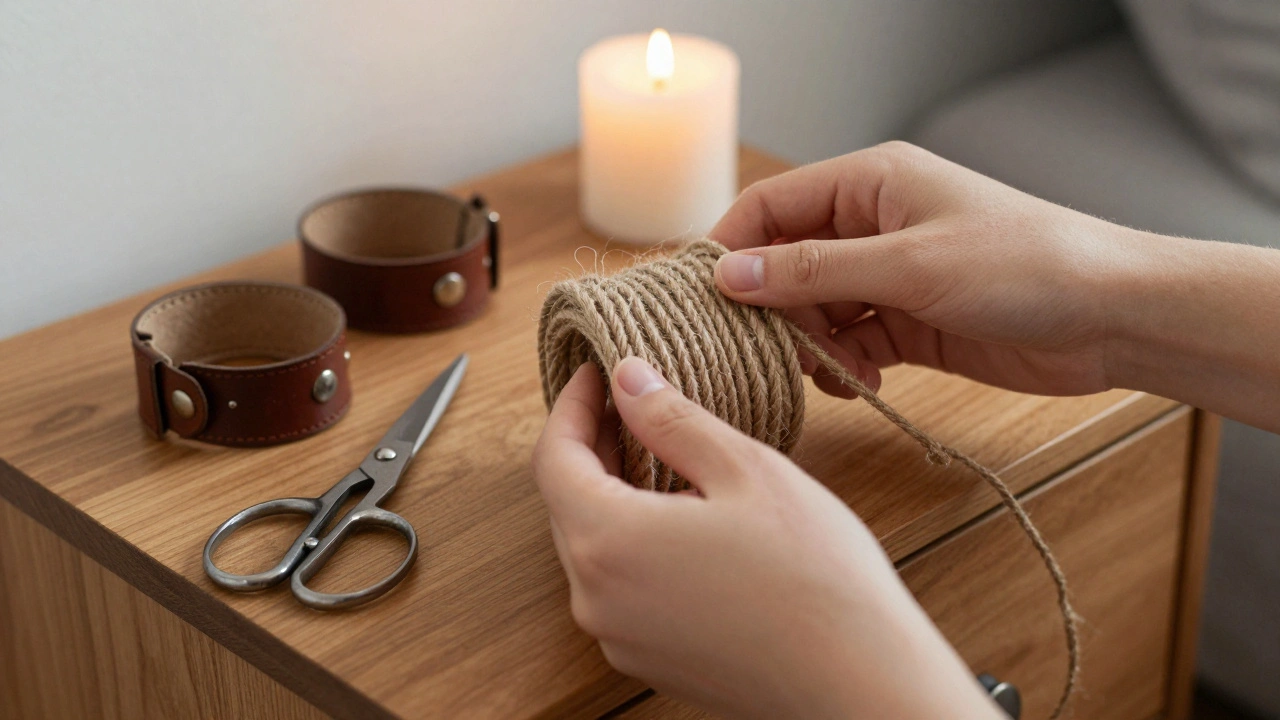
- Rope bondage-jute rope is popular for its texture and grip. Requires practice, but incredibly intimate. Don’t skip the tutorials.
- Bed bondage-straps attached to bed frames. Great for longer sessions. Easy to adjust and monitor.
- Psychological bondage-blindfolds, gags, or silence. Focuses on sensory deprivation. No physical ties needed.
Start with one. Don’t jump into rope work on day one. Soft restraints + a blindfold is a perfect starter combo.
How to Start Safely (Step-by-Step)
If you’re new, here’s exactly how to begin:
- Talk first-Have a conversation before any tying happens. What are your limits? What feels good? What’s off-limits? Write them down if you need to.
- Use a safe word-Something clear and easy to say. “Red” means stop immediately. “Yellow” means slow down. Never use “no” or “stop” as safe words-they might be part of the scene.
- Check circulation-Tie loosely enough that you can slide two fingers under the restraint. Numbness? Tingling? Loose it up. You should always be able to wiggle your fingers or toes.
- Never tie around the neck-Not even a little. Even a light scarf can cut off air. It’s not worth the risk.
- Have scissors nearby-Not just for cutting rope. Keep them within arm’s reach. Always.
- Start short-Try 10 to 15 minutes. You can go longer later. First time? Keep it light.
What to Avoid at All Costs
Some things look cool online. They’re not safe.
- Using electrical cords or zip ties-They don’t give way. They cut. They trap. Avoid them entirely.
- Bondage while alone-Unless you’re extremely experienced, never tie yourself up without someone nearby. Accidents happen. You could fall, get tangled, or pass out.
- Ignoring pain signals-Discomfort? Fine. Sharp pain? Stop. Numbness? Stop. Swelling? Stop. Your body will tell you. Listen.
- Using alcohol or drugs-They dull your senses. You need to be fully aware to recognize danger.
- Assuming consent-Just because someone said yes once doesn’t mean they’re okay with it now. Check in. Always.
Bondage vs. Other Forms of Sensory Play
It’s easy to confuse bondage with other forms of play. Here’s how it stacks up:
| Aspect | Bondage | Wax Play | Edging | Sensory Deprivation |
|---|---|---|---|---|
| Primary Focus | Physical restraint | Temperature sensation | Prolonged arousal | Reduced input (sight, sound) |
| Equipment Needed | Ropes, cuffs, straps | Wax, candle | None (body control) | Blindfold, earplugs |
| Beginner-Friendly | Yes | Medium | Easy | Yes |
| Risk Level | Low (with care) | Medium | Low | Low |
| Best For | Trust, surrender, control | Intensity, heat play | Delayed gratification | Heightened sensitivity |
Bondage stands out because it combines physical and psychological elements. It’s not just about sensation-it’s about letting go.

Where to Learn More (Safely)
YouTube is full of bad advice. Stick to trusted sources:
- John’s Rope Bondage Tutorials-Clear, calm, step-by-step. Focuses on safety.
- The SM 101 Book by Dossie Easton and Janet W. Hardy-The gold standard for ethical BDSM practices.
- Local workshops-London has several safe, inclusive spaces like The Bondage Collective and Consent & Connection. They offer beginner sessions monthly.
Don’t learn from porn. Learn from educators.
Frequently Asked Questions
Is bondage only for couples?
No. Many people explore bondage solo or with trusted friends. The key isn’t who you’re with-it’s whether both people give clear, enthusiastic consent. Solo bondage can be powerful too-using a bed harness or a door anchor to explore restraint without needing a partner.
Can bondage be erotic without being sexual?
Absolutely. Many people enjoy bondage purely for the feeling of surrender, the quietness, or the emotional release. You don’t have to have sex during or after. Some sessions end with just holding hands and talking. That’s normal. And beautiful.
How do I know if my partner is comfortable?
Look for body language, not just words. If they’re smiling, breathing evenly, and responding to touch, they’re likely enjoying it. If they go stiff, stop breathing, or pull away-pause. Ask. Always. Consent isn’t a one-time yes. It’s ongoing.
What if I feel scared during bondage?
That’s okay. Fear doesn’t mean it’s wrong. It might mean you’re stepping outside your comfort zone. Use your safe word. Pause. Breathe. Talk about it afterward. Many people say their first time felt scary-and then they felt proud they tried.
Do I need special equipment?
Not at all. Start with what you have: a silk scarf, a pillow, and a quiet room. You can buy gear later if you want. The most important tool isn’t rope-it’s communication.
Final Thought: It’s Not About the Ropes
Bondage isn’t about how tight the knots are or how fancy the cuffs look. It’s about the quiet moment after you’ve been tied up-when you realize you’re safe, held, and completely okay. It’s about knowing someone else has your back. That’s the real magic.
If you’re ready to try, start small. Talk. Listen. Breathe. And remember: the best bondage isn’t the one that looks the most intense. It’s the one where both people walk away feeling closer than before.





Douglas McCarroll
March 23, 2026 AT 09:47Hey, just wanted to say this post is a gem. Seriously. So many people think bondage is all about chains and dungeons, but you nailed it-it’s about trust, presence, and that quiet moment when you realize you’re safe. I’ve been doing this with my partner for a few years now, and honestly? It’s our favorite way to reconnect after a hectic week. No sex needed. Just soft cuffs, a blindfold, and talking afterward. It’s healing.
Also, love the emphasis on starting small. Silk scarf + blindfold is the perfect gateway. No pressure. No drama. Just two people being present.
Andrew Cheng
March 23, 2026 AT 20:40👏 this. I tried it once-just a scarf and a candle-and I cried. Not because it was scary, but because I finally felt... held. Like someone else was carrying the weight for a bit. So simple. So powerful.
Jillian Angus
March 24, 2026 AT 23:33Wait. You’re telling me you don’t need a background check, a signed waiver, and a licensed therapist present to try this? I’ve seen too many people get hurt. Like, real trauma. What about the guy in Ohio who tied himself up and died because he didn’t have scissors? This isn’t a ‘fun hobby’-it’s a liability minefield. And why are we normalizing this without mandatory education? What’s next? People tying themselves to ceiling fans?
Jennie Magalona
March 26, 2026 AT 08:12The most fascinating thing about bondage isn’t the ropes-it’s the paradox of surrender as empowerment. When you relinquish control, you’re not passive; you’re actively choosing vulnerability. And in a world that rewards hyper-autonomy, that choice becomes radical. It’s not about domination-it’s about co-creation. The body doesn’t lie. When you’re truly safe, your nervous system knows. And that’s rare. That’s sacred.
Also, the comparison table is spot-on. Sensory deprivation and bondage aren’t interchangeable. One quiets the mind; the other reconfigures the relationship between self and other. Both are valid. Neither is superior.
Aashish Kshattriya
March 27, 2026 AT 10:30China bans this. USA is going downhill.
leslie levin
March 27, 2026 AT 23:12OMG YES I DID THIS LAST WEEK WITH MY BEST FRIEND AND WE BOTH CRIED AND THEN ATE TACOS AND IT WAS PERFECT 😭🌮
Gordon Kahl
March 29, 2026 AT 23:47so like… you’re telling me the secret to emotional intimacy is… tying people up? wow. next you’ll tell me breathing is the key to happiness. mind blown. 🤡
Laura Fox
March 30, 2026 AT 06:45While I appreciate the intentionality of this piece, I must raise several concerns regarding the normalization of non-traditional sexual practices without institutional oversight. The absence of standardized protocols, certification requirements for facilitators, and mandatory psychological screening presents a significant public health risk. Furthermore, the casual recommendation of household items such as silk scarves as restraints is not only scientifically unsound but potentially lethal. A peer-reviewed study from the University of Toronto (2022) demonstrated a 37% increase in accidental asphyxiation events following the proliferation of DIY bondage tutorials on social media platforms. I urge the author to revise this content with appropriate clinical and ethical framing.
Theophilus Twaambo
March 31, 2026 AT 03:06Let’s be real-this is just a thinly veiled excuse to get people to tie each other up so they can watch porn later. You’re not ‘surrendering’-you’re enabling fetishization under the guise of ‘connection.’ And why is everyone acting like ‘soft restraints’ are safe? Silk slips. It frays. You think you’re safe? You’re one wrong tug away from a carotid artery rupture. Also-no one uses scissors. Everyone says they do. No one does. I’ve seen the footage.
And let’s not pretend this is about ‘emotional intimacy.’ It’s about dopamine spikes disguised as spirituality. You’re not ‘healing.’ You’re self-medication with risk. And don’t get me started on ‘consent.’ Consent is a legal fiction in these scenarios. People say yes because they’re scared of being judged. Or because they think it’ll make their partner happy. Or because they’ve been groomed by TikTok influencers with 200k followers and zero medical training.
Also-why is ‘bondage’ being framed as ‘beginner-friendly’? It’s not. It’s a gateway to kink escalation. Next thing you know, someone’s using zip ties because ‘it felt right.’ And then they’re dead. And then their partner gets charged. And then the media calls it ‘a tragic accident.’ But it wasn’t an accident. It was negligence. And you’re enabling it.
And the ‘local workshops’? Name one that’s licensed. I dare you. They’re all unregulated. No background checks. No insurance. No accountability. Just a guy in a leather vest with a jute rope and a Google search history full of ‘how to tie a clove hitch.’
And the ‘no neck tying’ rule? That’s the only rule people ignore. Everyone thinks ‘just a little.’ No. Just. No. Ever. You don’t get to be the exception. You’re not special. You’re a statistic waiting to happen.
And why is this post so… warm? So… cozy? Like a blanket for people who don’t want to face reality? This isn’t mindfulness. It’s dangerous romanticization. And I’m tired of it.
Olivia Pang
March 31, 2026 AT 16:36Oh, the ‘soft restraints’ narrative. How quaint. You’re telling me a silk scarf-material with a tensile strength of approximately 300 Newtons-is a ‘safe’ restraint? That’s like saying a tissue is a viable airbag. And ‘two fingers under’? That’s not a standard. That’s a suggestion from someone who’s never seen a hand turn blue. The median pressure threshold for nerve damage in the radial nerve is 32 mmHg. Do you know how many people actually measure that? Zero. Because it’s not sexy. It’s not Instagrammable. It’s not ‘cute.’
And ‘scissors nearby’? You think the average person in the throes of a submissive trance is going to reach for scissors? No. They’re going to panic. They’re going to thrash. They’re going to knock the scissors off the nightstand. And then what? You’re left with a paralyzed limb, a panic attack, and a partner who’s now terrified of ever touching them again.
Also-‘bondage without sex’? Please. That’s the most common rationalization I’ve heard from people who don’t want to admit they’re using this as a gateway to kink. You don’t ‘just want to feel held.’ You want to feel controlled. And that’s fine. But don’t lie to yourself. Or to others.
And the ‘The SM 101’ book? Groundbreaking. But it’s from 1991. The world has changed. We have wearables now. We have biometric monitors. We have smart cuffs that track pulse and pressure. Why are we still talking about jute rope and blindfolds like it’s 1999?
And the ‘local workshops’? You mean the ones that cost $150 and require you to ‘prove your emotional readiness’ via a private journal entry? That’s not education. That’s a cult screening.
And finally-why is the author so certain this is ‘beautiful’? Beautiful to whom? The person being restrained? Or the person doing the tying? Because I’ve seen the aftercare videos. I’ve seen the tears. I’ve seen the ‘I’m so proud of you’ texts. But I’ve also seen the silence. The withdrawal. The ‘I don’t know if I can do this again.’
There’s a difference between intimacy and coercion. And right now? The line is being blurred by people who mistake vulnerability for virtue.
Douglas McCarroll
April 1, 2026 AT 15:07Wow. I didn’t expect this thread to go here. But I appreciate the intensity. I’ve been doing this for years. I’ve had a hand go numb. I’ve had someone panic. I’ve had to stop mid-session because the vibe shifted. And you know what? We talked about it. We adjusted. We didn’t quit. That’s the point. It’s not about perfection. It’s about honesty. And if you’re scared of that? Maybe you’re not ready. Not because bondage is dangerous. But because you’re scared of real connection.