
Have you ever wondered how something as simple as a massage became tied to escort services? It’s not just a modern twist-it’s a story that stretches back thousands of years, shaped by culture, desire, and changing social rules. Today, when you hear "massage escort," you might picture a luxury service in a high-end apartment. But the roots run deeper than that. This isn’t about sex work alone. It’s about touch, healing, power, and intimacy-and how all of those things have shifted over time.
Key Takeaways
- Massage escort services trace back to ancient civilizations like Egypt, Greece, and China, where touch was tied to healing and ritual.
- The 19th century saw massage become medicalized in the West, separating it from companionship-until the 20th century brought it back underground.
- Modern massage escort services blend therapeutic techniques with emotional and physical intimacy, often operating in legal gray areas.
- Regulation varies wildly: some cities ban it outright, others tolerate it if no explicit sex occurs.
- Technology has changed everything-apps, encrypted messaging, and online portfolios now define how clients find and book services.
The Ancient Roots: Touch as Sacred and Sexual
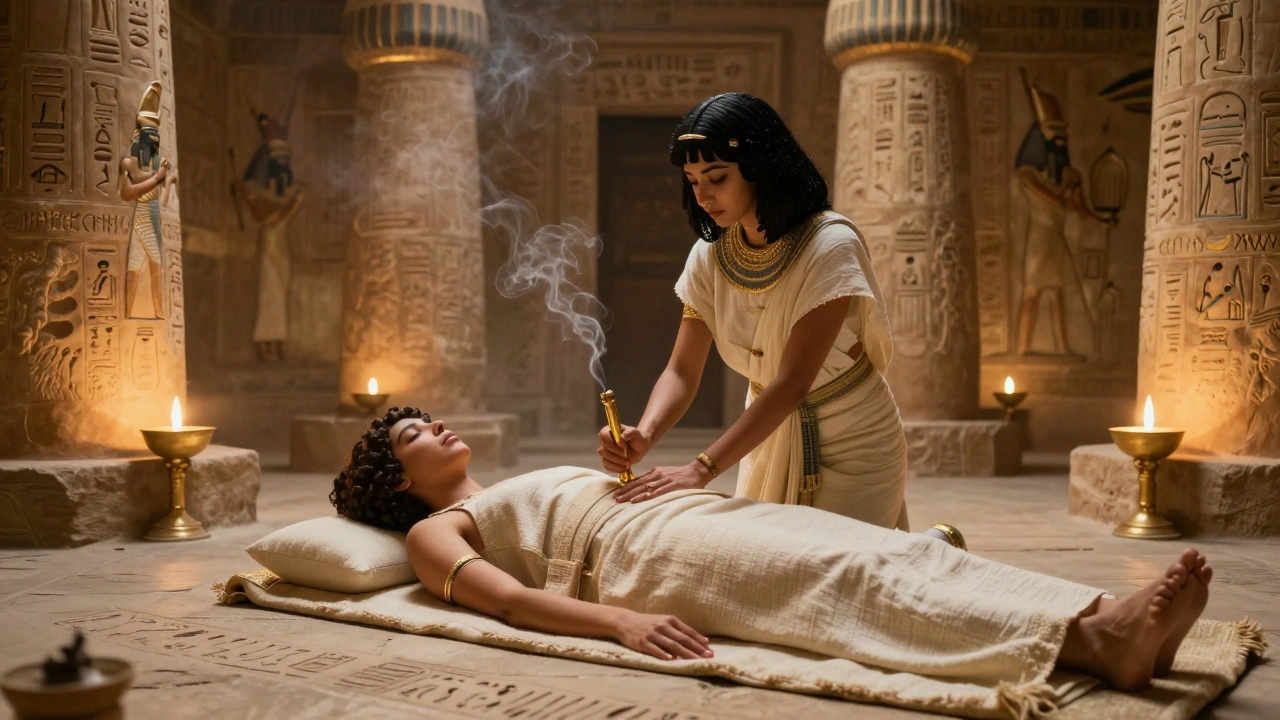
Long before there were Instagram profiles or WhatsApp bookings, massage was part of temple rituals. In ancient Egypt, priests and priestesses performed oil-based body rubs as part of spiritual purification. These weren’t just physical treatments-they were offerings to the gods. The same was true in India, where Ayurvedic massage was used to balance energy and restore health.
In classical Greece, athletes received massages after training, not just to ease sore muscles but to build trust and connection. These sessions often took place in palaestras-training halls where physical and emotional intimacy were woven together. Plato himself wrote about the bond formed through touch during athletic care.
China’s Han Dynasty records describe "anmo," a form of pressure-point massage performed by trained attendants who also provided companionship. These weren’t prostitutes in the modern sense-they were healers, confidants, and sometimes lovers. The line between care and pleasure was blurry, and that was intentional.
The Medical Shift: When Touch Got Clinical
Fast-forward to the 1800s. In Europe, Swedish physician Per Henrik Ling developed a system of massage based on anatomy and movement. His work became the foundation of modern physiotherapy. Suddenly, massage wasn’t about pleasure or ritual-it was about science. Doctors prescribed it for arthritis, paralysis, and even depression.
As massage became medicalized, the connection to personal intimacy was stripped away. Massage parlors were replaced by clinics. Therapists wore white coats. Touch became clinical, sterile, and strictly professional. For decades, the idea of a massage being combined with companionship was seen as inappropriate, even immoral.
But human nature doesn’t follow textbooks. While doctors were writing papers, underground networks kept the older traditions alive. In cities like Paris, Berlin, and London, men and women still sought out skilled hands-not just for relief, but for connection. These sessions were discreet, often arranged through word of mouth, and rarely documented.
The 20th Century: Back Underground
After World War II, returning soldiers brought back new ideas about sexuality and relaxation. In the U.S., massage began to re-emerge in spa culture, but it was still seen as a luxury for the wealthy. Meanwhile, in places like Thailand and Japan, traditional massage practices evolved into services that blended relaxation with sensual touch.
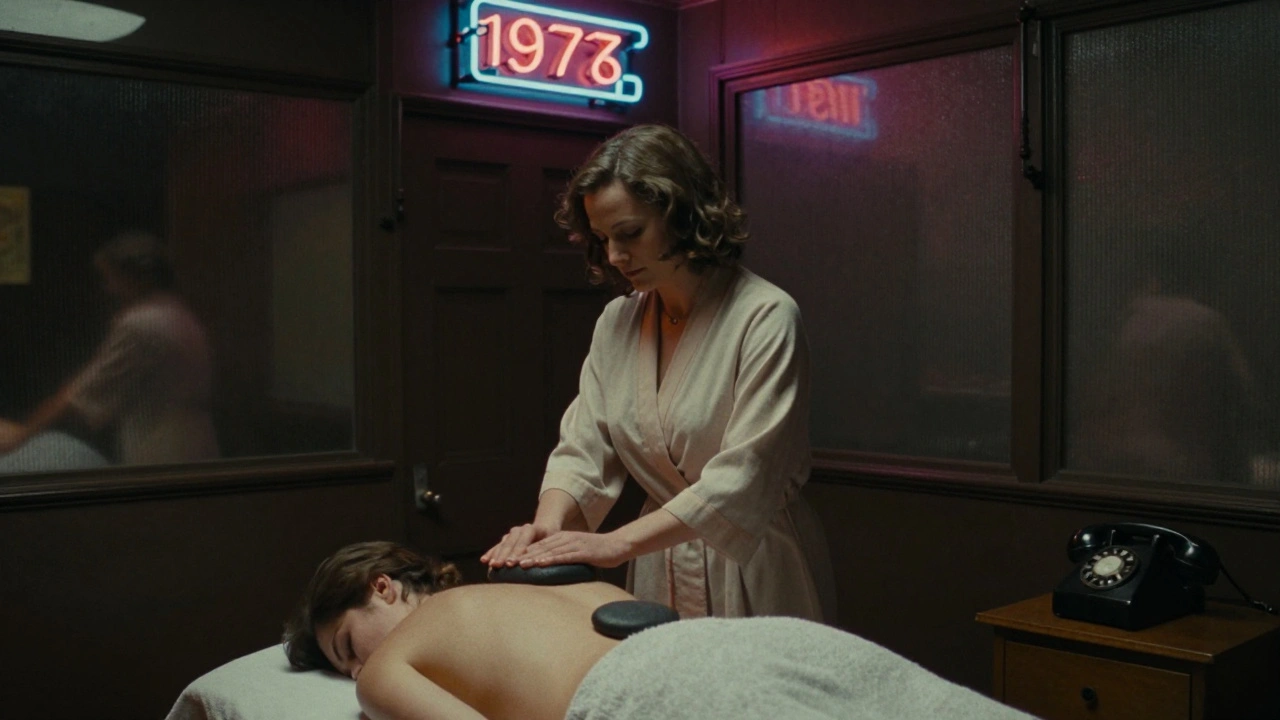
By the 1970s and 80s, the term "massage parlor" became synonymous with hidden sexual services. Police raids were common. Newspapers ran sensational stories. But demand didn’t drop-it just moved online. Clients stopped walking into dingy storefronts. They started calling numbers on flyers, then later, texting codes.
What made this shift different? It wasn’t just about sex. It was about control. People wanted someone who could read their body, anticipate their needs, and offer presence-not just performance. The modern massage escort became less about transaction and more about experience.
Today’s Landscape: Healing, Intimacy, and Legal Ambiguity
Now, in 2026, massage escort services operate in a patchwork of legality. In the UK, offering a massage is legal. Offering sex is not. But where exactly does one end and the other begin? That’s the gray zone.
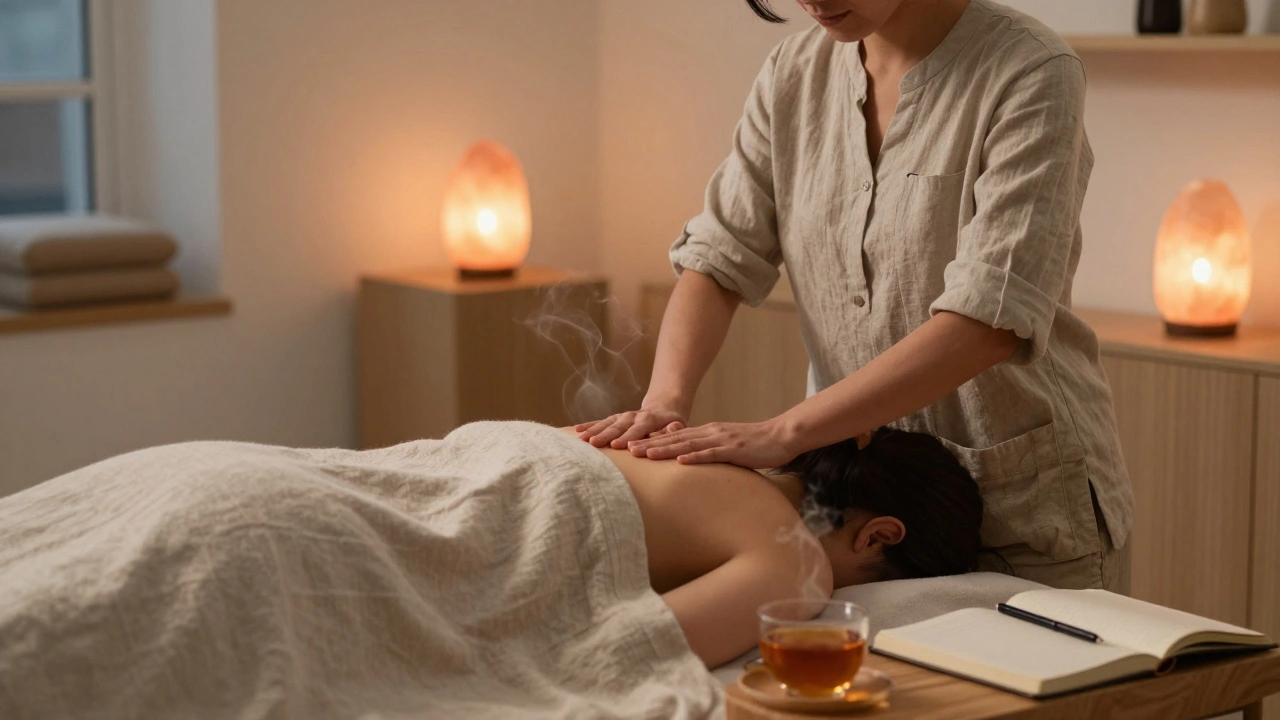
Many practitioners today are trained in Swedish, Thai, or Shiatsu techniques. They use oils, heated stones, and pressure points. The sessions last 60 to 90 minutes. Some include light kissing or cuddling. Others stop at the shoulders. It depends on the client’s request-and the practitioner’s boundaries.
Unlike in the past, today’s professionals often have certifications. They study anatomy. They know how to release tension in the trapezius or realign the pelvis. Many also offer aftercare: tea, quiet time, even journaling prompts. It’s not just a service. It’s a ritual.
London alone has dozens of independent practitioners who advertise through private websites and encrypted apps. They don’t use the word "escort" on their pages. Instead, they say "therapeutic companion," "relaxation specialist," or "wellness host." The language has evolved to avoid legal traps.
What You Can Expect During a Session
If you’ve never experienced a professional massage escort session, here’s what typically happens:
- You arrive at a private, clean apartment or boutique studio-often in a quiet neighborhood like Notting Hill or Hampstead.
- You’re greeted with tea or water. No aggressive sales pitch. Just calm.
- You discuss your goals: stress relief? muscle tension? emotional release?
- The session begins with gentle oils and slow strokes-never sudden or invasive.
- Communication is key. You’re encouraged to speak up if pressure is too much-or too little.
- After the massage, you rest. Often, you’re offered a towel-wrapped heat pack or a moment of silence.
There’s no nudity unless you both agree-and even then, draping is always used. The focus is on trust, not temptation. That’s what sets today’s professionals apart from stereotypes.
Pricing and Booking: No Hidden Fees
Prices vary by city, experience, and duration. In London, expect to pay between £80 and £200 for a 60- to 90-minute session. Higher-end practitioners with medical training or years of experience may charge £250 or more.
Booking is almost always done online. You’ll find them through private directories, encrypted messaging apps, or word-of-mouth referrals. No public ads. No Craigslist. No unsecured websites.
Payment is usually cash or bank transfer. No credit cards-too traceable. Most professionals require a 24-hour cancellation policy. If you show up late, the session still ends at the scheduled time.
Safety Tips: Protecting Yourself
If you’re considering a session, here’s how to stay safe:
- Always meet in a well-lit, private location-not a hotel room you don’t control.
- Verify their identity. Ask for a photo ID and check their website or client reviews.
- Never pay upfront. Pay after the session, or use a trusted escrow service.
- Set boundaries before you begin. Say them clearly. No one should pressure you.
- Let someone know where you’re going and when you’ll return.
These aren’t paranoid steps. They’re smart ones. The best practitioners want you to feel secure. That’s part of the service.
Massage Escort vs. Traditional Spa Massage
| Feature | Massage Escort | Traditional Spa Massage |
|---|---|---|
| Setting | Private apartment or boutique studio | Public spa or clinic |
| Duration | 60-120 minutes | 30-90 minutes |
| Therapist Training | Often certified in multiple modalities (Thai, Shiatsu, Swedish) | Typically licensed in one modality |
| Client Interaction | Personalized, conversational, emotional support included | Professional, minimal conversation |
| Touch Style | Can include light cuddling, kissing, or sensual pressure | Strictly therapeutic, no skin-to-skin beyond massage areas |
| Booking Method | Private websites, encrypted apps | Online booking, walk-ins |
| Price Range (London) | £80-£250 | £40-£120 |
Frequently Asked Questions
Is a massage escort the same as a prostitute?
No. A massage escort focuses on touch, relaxation, and emotional presence. While physical intimacy may occur, it’s not the main goal-and it’s never guaranteed. Prostitutes offer sex as a service. Massage escorts offer a full-body experience that may include intimacy, but it’s shaped by consent, boundaries, and mutual comfort-not a transaction.
Are massage escort services legal in the UK?
Yes, as long as no explicit sexual intercourse takes place. Offering a massage, even with sensual elements, is not illegal. However, if money is exchanged for sex, it becomes a criminal offense under the Sexual Offences Act 2003. Many practitioners walk a fine line, keeping sessions strictly within legal boundaries.
Can men use massage escort services too?
Absolutely. While many clients are men, there’s a growing number of women and non-binary people seeking these services. The need for non-sexual intimacy, stress relief, and emotional connection doesn’t discriminate by gender. Many practitioners now offer services tailored to all identities.
How do I know if a massage escort is legitimate?
Look for professionalism: a clean website, clear pricing, verified photos, and client testimonials. Avoid anyone who pushes for immediate sex, refuses to answer questions, or meets in public places. Legitimate practitioners prioritize your safety and comfort-they’ll explain boundaries upfront.
Do massage escorts offer long-term companionship?
Some do, but it’s rare and usually informal. Most sessions are one-time. A few clients return weekly or monthly, forming a pattern of trust. But this isn’t dating. It’s a structured, consensual arrangement focused on touch and presence-not romance or emotional dependency.
Final Thoughts
The evolution of massage escort isn’t about sex. It’s about how we’ve learned-or failed-to connect. In ancient times, touch was sacred. In the 20th century, it was suppressed. Today, it’s being reclaimed-not as something shameful, but as a human need. Whether you’re curious, skeptical, or already a client, remember this: the best sessions aren’t about what happens. They’re about how you feel afterward. Calm. Seen. Held.




adam denature
February 18, 2026 AT 21:52so like... massage and sex are the same thing right? people just wanna say it differently to feel less guilty
its always about sex dont pretend its about healing
they just call it "therapeutic companion" so they dont get arrested
we all know what this is
peter may
February 20, 2026 AT 17:58One must, with due deference to the historical and anthropological record, acknowledge that the conflation of tactile therapy with erotic companionship is not merely a contemporary aberration-but rather, a persistent cultural oscillation, wherein societal repression of somatic intimacy invariably precipitates its clandestine re-emergence under euphemistic guises.
Indeed, the medicalization of massage in the nineteenth century, as championed by Ling, was not an evolution toward purity, but an act of cultural puritanism-erasing the sacred, the sensual, and the relational dimensions of touch in favor of a sterile, mechanistic paradigm.
Modern practitioners, then, are not merely service providers; they are reclamationists-restoring the ancient trinity of care, presence, and embodied connection that Western modernity so violently severed.
One might even argue that the legal gray zones in which they operate are not failures of regulation, but necessary spaces of resistance against a society that still cannot bear to see the human body as anything other than a site of sin or spectacle.
Dan Sprague
February 22, 2026 AT 10:36man i just got my first session last week and wow
it wasnt what i expected at all
like yeah there was some light cuddling but mostly it was just... being held
the girl asked me how my week was, really listened, and then massaged my shoulders like she knew exactly where i was holding stress
no pressure, no weird vibes, just calm
im gonna go back next month
theyre not what you think they are
Mark Sullivan
February 22, 2026 AT 15:36you think this is about healing? think again.
this is a front for human trafficking rings that target vulnerable women and girls under the guise of "wellness"
the "certifications"? fake. the "private websites"? laundering fronts.
every single one of these "practitioners" is linked to organized crime-encrypted apps, cash payments, no ID verification? classic red flags.
and don't tell me about "boundaries"-if they're letting clients cuddle, they're already breaking the law.
the police aren't cracking down because they're complicit.
you're not being healed-you're being groomed.
Renee Kyndra
February 23, 2026 AT 15:55i’ve been a massage escort for five years.
not because i needed the money-though it helps-but because people are starving for quiet touch.
not sex. not romance. just... someone who doesn’t rush, who listens, who holds space.
i’ve held men who cried after their first session.
i’ve held women who hadn’t been hugged in years.
we don’t sell intimacy.
we offer it-carefully, consciously, consensually.
and yeah, we’re legal.
because what we do isn’t crime.
it’s care.
Anshu Chauhan
February 24, 2026 AT 17:51the ancient civilizations you mention had structured spiritual roles, not commercial services.
modern massage escort is a capitalist distortion of sacred traditions.
you cannot monetize intimacy without corrupting it.
the fact that people now pay for "emotional presence" proves how lonely we’ve become-not how enlightened.
we’ve replaced ritual with transaction.
and that is not progress.