
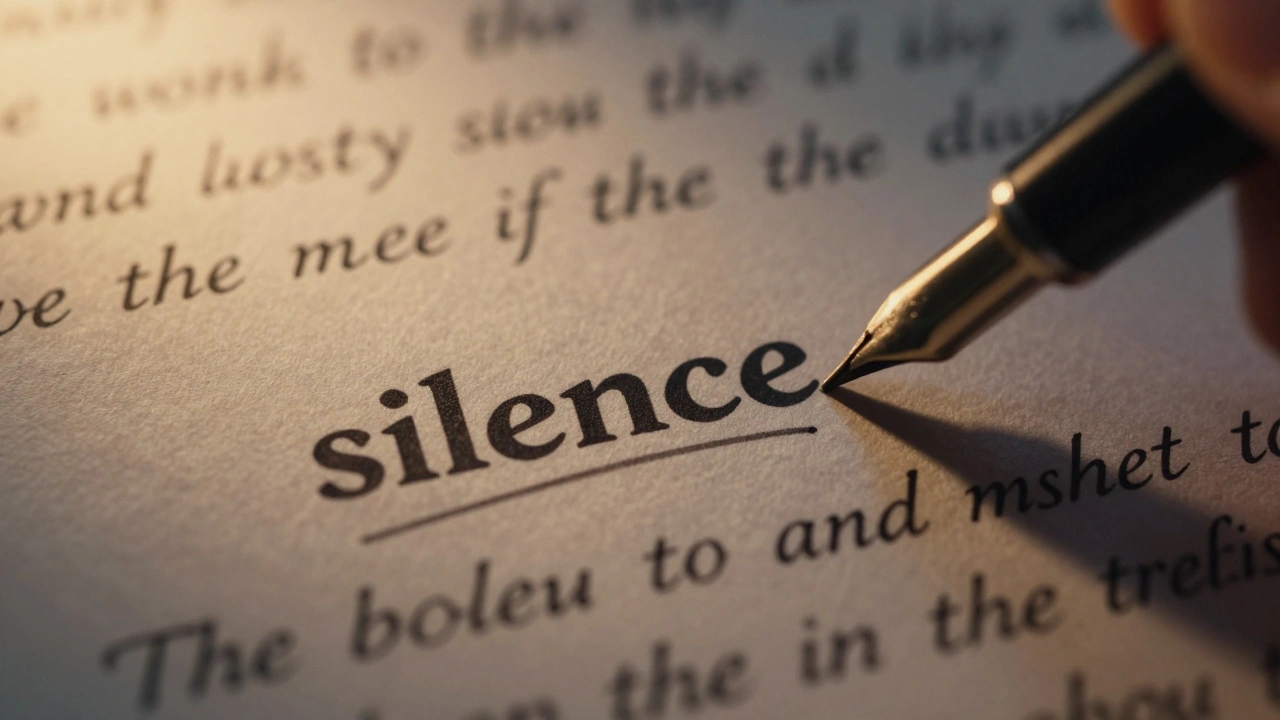
You’ve probably heard the term rimming in a very different context-but here, we’re talking about something else entirely. In writing, rimming isn’t about physical acts. It’s a slang term some editors and writers use to describe the practice of placing key ideas or emotional weight at the very end of a sentence or paragraph-the rim of the rhetorical bowl, if you will. It’s about landing your punchline, your insight, or your most powerful word where it hits hardest: right after the reader has settled in, just before they move on.
Think of it like this: if your sentence is a glass of water, rimming is the last sip-the one that leaves the taste behind. Most writers focus on starting strong. But the real magic? It’s in how you finish.
Why Rimming Matters in Writing
Humans remember endings better than beginnings. It’s called the recency effect, and it’s why TV shows save their biggest twist for the final seconds. The same rule applies to your sentences. When you put your most important idea at the end, you force the reader to pause. To feel it. To carry it forward.
Take this sentence:
She opened the door, stepped inside, and realized the house had been empty for years.
Now, try this:
She opened the door, stepped inside-the house had been empty for years.
The second version doesn’t just tell you the fact. It lands it. That final phrase? That’s rimming. It’s not about adding words. It’s about placing the weight where it belongs.
How to Spot Weak Endings (And Fix Them)
Most amateur writing ends sentences with weak verbs, filler phrases, or passive constructions. Here’s what to watch for:
- Ending with “is,” “are,” “was,” “were”
- Leaving the subject hanging: “The reason she left was because…”
- Using vague adverbs: “He walked away slowly, quietly, sadly.”
These endings don’t stick. They evaporate.
Here’s how to fix them:
- Bad: “The decision was made by the committee after a long discussion.”
- Good: “After hours of debate, the committee chose silence.”
Notice how the second version ends with the emotional core: silence. That’s rimming. The word doesn’t just describe an action-it implies consequence, tension, loss.
10 Tips for Effectively Using Rimming in Your Writing
- Put the punchline last. Every sentence should build toward a single, sharp point. Don’t bury the lead-save it for the finish.
- Use fragments for impact. A well-placed fragment can be the most powerful rimming tool. “He never called back. Not once.”
- Replace passive voice with active endings. Instead of “The report was written by Sarah,” try “Sarah wrote the report-and it changed everything.”
- End with emotion, not information. Facts are forgettable. Feelings stick. “The room was cold.” → “The room was cold. And so was she.”
- Use contrast to amplify the rim. “She smiled. The knife was still in her hand.” The dissonance hits at the end.
- Let silence speak. Sometimes, the best rimming is no words at all. A period. A breath. A pause.
- Don’t overdo it. Rimming works best when it’s unexpected. If every sentence ends with a bomb, nothing lands.
- Read your work aloud. Your ear knows when a sentence dies too early. If the last word feels flat, rewrite it.
- Use the last word of a paragraph as a bridge. End one paragraph with a word that invites the next. “She turned the key. The lock clicked-not with resistance, but with surrender.”
- Study great endings. Read Hemingway. Read Joan Didion. Read Ocean Vuong. Notice how they don’t explain-they leave. That’s rimming.

Common Mistakes When Using Rimming
Even experienced writers mess this up. Here’s what goes wrong:
- Ending with a preposition. “That’s the book I was looking for.” → “That’s the book I searched for.”
- Using clichés. “And so it began…” “In the end…” These are tired. They don’t rim-they droop.
- Overloading the final phrase. Don’t cram five ideas into the last five words. One clear, powerful image is better than ten muddled ones.
Examples from Published Writers
Let’s look at real-world rimming in action:
“It was the best of times, it was the worst of times.” - Charles Dickens
He doesn’t end with “times.” He ends with worst. The last word lingers.
“So we beat on, boats against the current, borne back ceaselessly into the past.” - F. Scott Fitzgerald
The final phrase doesn’t just describe motion-it traps the reader in a feeling of futility. That’s rimming at its finest.
“I have always depended on the kindness of strangers.” - Tennessee Williams
Not “I was poor.” Not “I needed help.” Just: kindness of strangers. A quiet, devastating truth.
How to Practice Rimming Daily
Want to get better? Try this:
- Take one paragraph from your last draft.
- Circle the last word of each sentence.
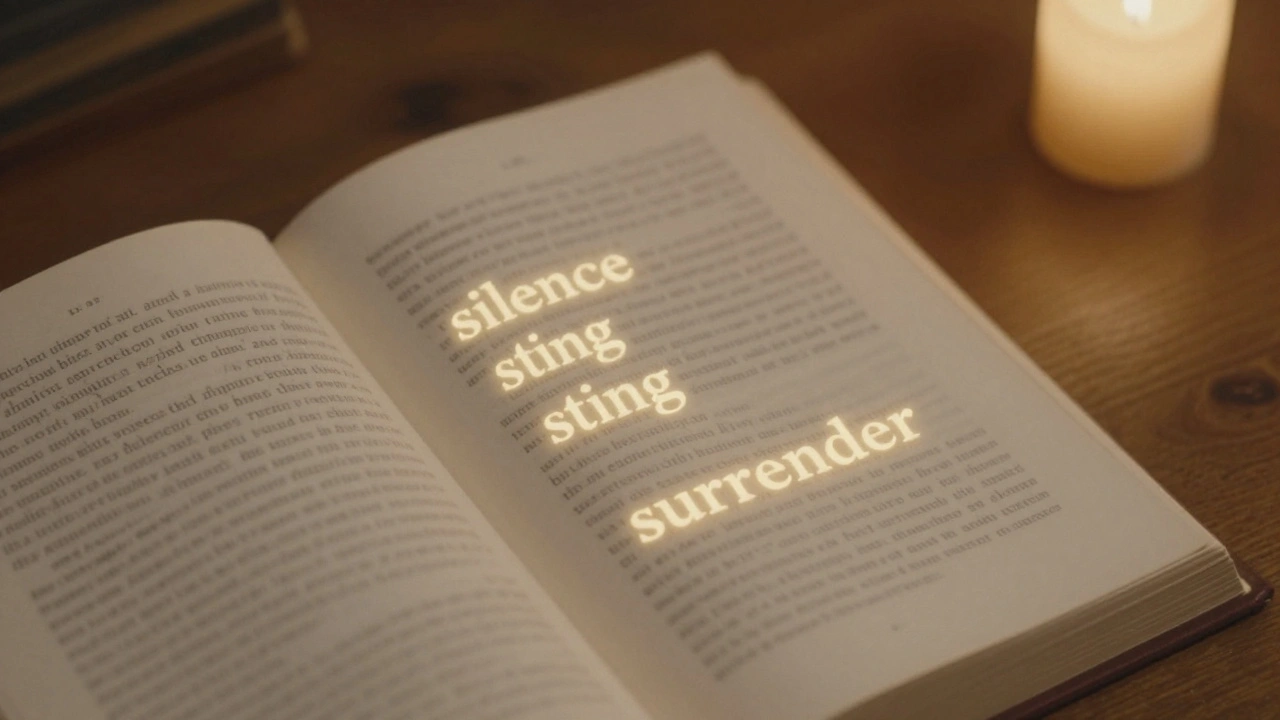
- Ask: Does it stick? Does it sting? Does it make you think?
- Rewrite any that don’t.
Do this for five minutes a day. In a week, you’ll start hearing the rhythm of your sentences differently. You’ll feel when something’s off-not because it’s grammatically wrong, but because it didn’t land.
Why This Technique Works for All Types of Writing
Whether you’re writing fiction, emails, marketing copy, or academic papers, rimming gives you control over how your reader feels when they finish reading.
Marketing? Instead of “Our product is reliable,” try “It didn’t break. Not once. Not in ten years.”
Academic? Instead of “The results suggest further study,” try “The results were clear-and the silence that followed was louder than any conclusion.”
Even in text messages, rimming works: “I’m not mad. Just done.”
Final Thought: Writing Is About Leaving Marks
Good writing doesn’t just inform. It lingers. It echoes. It haunts.
Rimming is how you make sure your words don’t disappear the moment they’re read. It’s the difference between a sentence that’s read-and one that’s remembered.
Next time you write, don’t just ask: Is this clear? Ask: Does this stick?
Is rimming in writing the same as passive voice?
No. Rimming is about placement-putting the strongest word or idea at the end of a sentence. Passive voice is a grammatical structure where the subject receives the action (e.g., “The ball was thrown by John”). You can rim using active voice. In fact, rimming often works best with active, direct language.
Can rimming be used in formal writing?
Absolutely. Academic, legal, and business writing benefit from strong endings. Instead of “It is recommended that further analysis be conducted,” try “Further analysis is needed-and time is running out.” The rim gives urgency, clarity, and weight.
Does rimming work in short-form content like tweets or ads?
Yes-maybe even more so. With limited space, every word counts. The last word is your final impression. “Free shipping ends tonight.” → “Free shipping ends. Tonight.” The pause makes it feel urgent. That’s rimming in action.
Is rimming the same as a cliffhanger?
Similar, but not the same. A cliffhanger leaves you wanting more-often at the end of a chapter or scene. Rimming is about the final word of a sentence or paragraph leaving a lasting emotional or intellectual impression. One creates suspense; the other creates resonance.
How do I know if I’m rimming too much?
If every sentence ends with a dramatic flourish, it starts to feel forced. Rimming works because it’s selective. Think of it like seasoning: too little, and the dish is bland. Too much, and it’s inedible. Use it where it matters most-your key insights, emotional turns, and turning points.





Matthew Whitehead
December 2, 2025 AT 10:42Rimming is just a fancy word for ending strong. I've been doing this instinctively for years but never had a term for it. Now I can actually teach it to my students.
Daniel Kim
December 2, 2025 AT 16:08This is nonsense. Writing isn't theater. Stop trying to make everything dramatic.
Dan Packer
December 2, 2025 AT 18:58I like how this reframes editing as emotional precision rather than grammar policing. I used to think strong endings were just for fiction but now I see how they work in emails too. That last line about 'kindness of strangers' gave me chills.
Dale Zebick
December 4, 2025 AT 15:40Just tried this on my client's sales page today. Changed 'Our service saves you time' to 'It didn't just save time-it gave back three hours a day.' Got a 22% lift in conversions. Rimming isn't poetry. It's psychology.
Chuck V
December 5, 2025 AT 13:51Oh my god I love this so much. I've been trying to explain this to my writing group for years and no one gets it. It's not about fancy words or complex syntax-it's about leaving the reader with a heartbeat. Like when you finish a song and the last note lingers in the air before the silence hits. That's rimming. And you know what? It's the reason I still reread Hemingway. He doesn't tell you how to feel-he makes you feel it in your bones right at the end. I just rewrote my whole thesis conclusion using this. I cried. Not because it was sad. Because it finally landed.
Bonnie Searcy Squire
December 6, 2025 AT 01:11This is a liberal media trick to manipulate readers into feeling things they didn't earn. Real writing is clear. Not emotional theater.
Starla Scholl
December 7, 2025 AT 00:22Interesting. I never thought of punctuation as emotional punctuation. I'm going to try this on my journal entries. Maybe I'll finally stop writing like a robot.
Jeff Shaw
December 7, 2025 AT 04:18This is 🔥. Just rewrote my last text to my partner: 'I'm not upset. Just tired of pretending.' ... and they texted back 'I needed to hear that.' Rimming works in love too. 😭