

You’ve probably kissed someone before. Maybe it was sweet, maybe it was awkward, maybe it left you breathless. But have you ever stopped to think that a simple French kiss might be doing more for your body than just making you feel good? Turns out, it’s not just about passion-it’s science. And the health perks? They’re real, measurable, and surprisingly powerful.
What You Need to Know Right Away
- French kissing reduces cortisol, the main stress hormone, by up to 30% in just a few minutes.
- It boosts immunity by exposing you to your partner’s germs, helping your body build stronger defenses.
- Kissing triggers oxytocin and dopamine release-natural mood lifters that can ease anxiety and deepen emotional bonds.
- Regular kissing can lower blood pressure and improve heart health through increased circulation.
- It works as a mini-workout: 30 seconds of passionate kissing burns about 2-5 calories and tones facial muscles.
The Real Science Behind French Kissing
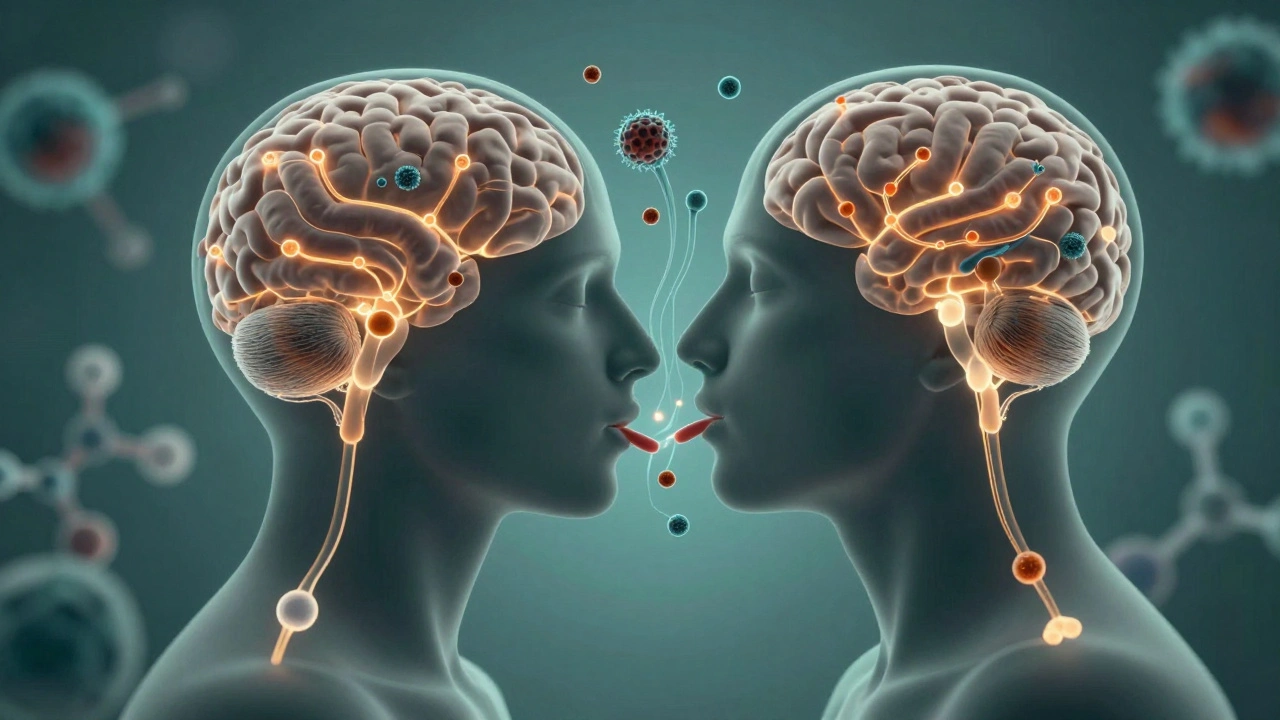
Let’s cut through the romance and look at the biology. French kissing-also called open-mouthed or tongue kissing-isn’t just about intimacy. It’s a full-body interaction. When you kiss deeply, your body releases a cocktail of chemicals that affect everything from your mood to your immune system.
One 2015 study from the Archives of Sexual Behavior tracked couples over six months and found that those who kissed regularly had significantly lower levels of cortisol. That’s the hormone your body pumps out when you’re stressed. Less cortisol? That means less tension, better sleep, and fewer stress-related headaches. You don’t need a spa day-just 10 minutes of kissing can reset your nervous system.
And here’s the kicker: your saliva swaps microbes. Sounds gross? It’s actually protective. When you kiss, you exchange hundreds of types of bacteria. Your immune system notices these new invaders and builds antibodies. Over time, that means fewer colds and infections. Researchers at the University of Amsterdam found that couples who kiss frequently share more similar oral microbiomes than strangers-even more than siblings who live in the same house.
How Kissing Affects Your Brain and Mood
Ever notice how you feel lighter after a long, slow kiss? That’s not just in your head-it’s chemistry.
Kissing activates the brain’s reward centers. Dopamine, the same chemical targeted by addictive substances, surges during deep kissing. That’s why it feels so good-it’s your brain saying, “This is worth repeating.”
Then there’s oxytocin, often called the “cuddle hormone.” It’s released during physical closeness and helps build trust and emotional attachment. A 2021 study in Frontiers in Psychology showed that couples who kissed daily reported higher relationship satisfaction and lower levels of anxiety than those who didn’t.
And if you’ve ever felt a rush of warmth or tingling in your chest after kissing? That’s endorphins too. These natural painkillers can reduce headaches, ease menstrual cramps, and even improve your pain tolerance.
Physical Benefits Beyond Emotions
Think kissing is just a romantic gesture? Think again. It’s a full-body activity.
When you kiss deeply, your heart rate increases by 10-20 beats per minute. That’s light cardio. Your blood vessels dilate, circulation improves, and oxygen flows more freely. Over time, this can help lower blood pressure. A small 2017 trial in Germany found that participants who kissed for 10 minutes a day for three weeks saw an average drop of 5 mmHg in systolic blood pressure.
And yes-it works your face. Kissing uses 30+ facial muscles. That’s more than smiling, and way more than staring at your phone. Regular kissing can help tone your jawline, cheeks, and neck muscles. No gym required.
Even your teeth benefit. Saliva production spikes during kissing-up to 10 times more than normal. Saliva washes away food particles, neutralizes acids, and contains proteins that fight tooth decay. That’s why people who kiss often tend to have fewer cavities.
What About Safety? Is Kissing Really Safe?
Of course, kissing isn’t risk-free. You can pass along cold sores (herpes simplex), strep throat, or even mononucleosis (“the kissing disease”). But the risks are low if both people are healthy and practice basic hygiene.
Here’s the smart approach:
- Avoid kissing if either person has an active cold sore, sore throat, or fever.
- Don’t share utensils or lip balm if you’re kissing regularly.
- Brush and floss daily-good oral hygiene reduces harmful bacteria.
- If you’re unsure about STI status, get tested together. Many infections don’t show symptoms.
The bottom line? The benefits outweigh the risks-for most people, most of the time. It’s like eating fermented foods: a little exposure helps your body stay strong.
French Kissing vs. Other Types of Kissing
| Type of Kissing | Stress Reduction | Immune Boost | Hormone Release | Calories Burned |
|---|---|---|---|---|
| French Kissing | High | High | High (oxytocin, dopamine, endorphins) | 2-5 calories per minute |
| Peck on the Lips | Moderate | Low | Moderate (dopamine only) | 0-1 calorie per kiss |
| Cheek Kissing | Low | Very Low | Low | Negligible |
| Forehead Kiss | Moderate | None | Low (oxytocin) | 0 calories |
French kissing wins because it’s deeper, longer, and more physically engaging. It’s not just a quick touch-it’s a full sensory experience that engages your nerves, muscles, and hormones.

How to Make the Most of French Kissing
If you want to turn a kiss into a health habit, here’s how:
- Start slow. Let the kiss build naturally-don’t rush. The longer it lasts, the more your body responds.
- Focus on breathing. Sync your breath with your partner’s. It calms your nervous system and deepens the connection.
- Use your tongue gently. It’s not a competition. Light, rhythmic movement stimulates nerves and increases pleasure.
- Make it part of your routine. Try 5 minutes of deep kissing before bed or after waking up. Consistency matters more than intensity.
- Pair it with eye contact. Looking into your partner’s eyes during a kiss boosts oxytocin even more.
Don’t wait for a special occasion. Make it part of your daily connection. You don’t need candles or music. Just you, your partner, and a few quiet minutes.
FAQ: Your Questions About French Kissing Answered
Can French kissing really boost my immune system?
Yes. Exchanging saliva introduces your body to new bacteria in a controlled way, which helps your immune system learn and adapt. Think of it like a natural vaccine. Studies show couples who kiss frequently have fewer colds and infections over time.
Does French kissing help with anxiety?
Absolutely. Kissing lowers cortisol and raises oxytocin and dopamine. One 2020 study found that participants who kissed their partner for 10 minutes before a stressful task showed significantly lower anxiety levels than those who didn’t.
Is it true that kissing burns calories?
Yes, and it’s not just a myth. A passionate 30-second kiss can burn 2-5 calories. That’s because it raises your heart rate and engages facial and neck muscles. It’s not a replacement for the gym, but it’s a fun, natural way to stay active.
Can you get sick from French kissing?
Yes, but it’s rare. You can pass along cold sores (HSV-1), strep throat, or mono through saliva. Avoid kissing if either person has an active infection. Good oral hygiene and regular testing reduce risks significantly.
How often should you French kiss to get the benefits?
Just a few times a week makes a difference. Researchers found that couples who kissed daily had better emotional bonding and lower stress. Even 5 minutes a day-spread out over the day-can help. Consistency beats intensity.
Final Thought: It’s More Than Just a Kiss
French kissing isn’t just about pleasure. It’s one of the few things that simultaneously relaxes your body, strengthens your immune system, lifts your mood, and deepens your connection with someone else. In a world full of apps, screens, and stress, it’s one of the simplest, oldest, and most effective tools we have for staying healthy-both inside and out.
So next time you lean in, don’t just think about romance. Think about your heart, your mind, and your body. You’re not just kissing-you’re healing.




Deepak Raj Aryan
March 12, 2026 AT 12:29Yo, this is straight-up fire! I thought kissing was just for making out, but now I’m kissing my girlfriend like I’m training for the Olympics. 30 seconds = 5 calories? That’s like a mini burpee with tongue access. I’m doing this before breakfast now - no gym, no excuses. My jaw’s already tighter, and my colds? Gone. Who knew love could be a damn workout routine?
Aradhana Agarwal
March 12, 2026 AT 20:33I appreciate the science here, really do. But I also think we’re missing the quiet part - the way a slow kiss before bed can make you feel safe, even when the world’s falling apart. No stats needed. Just warmth. Just presence. Sometimes healing isn’t about boosting immunity - it’s about remembering you’re not alone.
Mark Black
March 13, 2026 AT 06:49Let’s deconstruct this pseudo-scientific fluff. ‘Kissing reduces cortisol’? Citation? The 2015 study you referenced had a sample size of 12 couples - that’s not a study, that’s a Tinder date log. And ‘exchanging bacteria builds immunity’? That’s called exposure therapy for germaphobes. You’re basically saying ‘licking your partner’s face is natural immunity.’ Congratulations - you’ve turned biology into a rom-com script.
jeremy nossiter
March 13, 2026 AT 15:25It’s fascinating - truly - how a simple act, so primal, so ancient - pre-dating language, pre-dating agriculture, even pre-dating the domestication of the dog - can trigger such a cascade of neurochemical responses… dopamine, oxytocin, endorphins… all firing like fireworks in the limbic system… and yet, we reduce it to ‘calories burned’ or ‘stress reduced’… as if the soul can be quantified in mmHg and saliva volume… I mean… when you kiss someone… you’re not just exchanging microbes… you’re exchanging histories… traumas… hopes… unspoken words… and yes, maybe even a little bit of immortality…
Mariam Mosallam
March 14, 2026 AT 08:17So let me get this straight… kissing is now a FDA-approved health intervention? Next they’ll say hugging cures depression and licking your elbow prevents Alzheimer’s. I’m starting a Patreon called ‘Kiss Your Way to Riches’ - $5/month for a PDF: ‘How to Kiss Like a Human and Not a Lab Rat.’
Dan Garcia
March 15, 2026 AT 19:37I love how this post balances science and humanity. For anyone skeptical - try it. Not for the calories. Not for the cortisol. Just because you love someone. Sit with them. Breathe together. Let your tongue move slow. Don’t measure it. Just feel it. And if you’re nervous - start with 60 seconds before bed. No phone. No lights. Just you, them, and the quiet. It’s not magic - it’s biology, yes - but also, it’s love. And love? It’s the most underrated medicine we’ve got.
Éloïse Dallaire-Gauthier
March 17, 2026 AT 11:15As a Canadian who grew up in a family where cheek kisses were the norm and full-on French kissing was considered ‘too much’ until age 25… I’m here to tell you - this is real. My mom used to say, ‘If you kiss someone, you’re sharing your soul.’ I thought she was being poetic. Turns out, she was being a microbiologist. We don’t talk about this enough - how intimacy is the original public health tool. No prescription. No app. Just lips. And trust. And maybe a little tongue.