

You’ve probably seen the Kamasutra as a book of exotic positions-curled up on a coffee table, tucked between yoga manuals and romance novels. But what if it’s not really about positions at all? What if it’s a quiet guide to knowing yourself better-through touch, presence, and deep connection with another person?
What the Kamasutra Really Is (And Isn’t)
The Kamasutra isn’t a pornographic manual. It was written over 2,000 years ago in ancient India by Vatsyayana, a scholar who studied human desire not as something to suppress, but as something to understand. He didn’t just write about sex-he wrote about relationships, communication, emotional intimacy, and how to live a full, balanced life. The text covers everything from how to meet someone to how to handle jealousy, how to build trust, and how to truly listen-not just with your ears, but with your whole body.
Only about 20% of the Kamasutra is about physical positions. The rest? It’s about the art of being present. About noticing how your partner breathes when they’re relaxed. About learning when to move slowly and when to let go. About understanding your own desires without shame.
Think of it like this: the Kamasutra is less like a recipe book and more like a mirror. It doesn’t tell you what to do-it helps you figure out what you really want.
Why Self-Discovery Starts With Intimacy
We often think self-discovery means meditating alone in a forest or journaling at 5 a.m. But what if the most powerful mirror isn’t in your bathroom, but in the eyes of someone you trust?
Intimacy forces you to be honest. When you’re close to someone, you can’t hide. Your body reacts before your mind catches up. A quick breath. A tensed shoulder. A sudden silence. These aren’t just signals to read in your partner-they’re clues about yourself.
Have you ever noticed how you behave differently with someone you feel safe with versus someone you’re trying to impress? The Kamasutra teaches you to pay attention to those shifts. It asks: When you’re touched, do you pull away because you’re afraid of vulnerability-or because you’re not ready to let someone in?
Sex isn’t just physical. It’s emotional archaeology. Every kiss, every glance, every quiet moment after love-making peels back a layer of who you think you are-and reveals who you’re becoming.
How the Kamasutra Helps You Understand Your Desires
Most of us never learned how to name our desires. We know we want closeness, but we don’t know what kind. Do you crave slow, lingering touch? Or is it intensity that makes you feel alive? Do you need words before skin, or silence before surrender?
The Kamasutra doesn’t give you one way to love. It gives you dozens of ways to explore. And that’s the point. It’s not about copying a pose-it’s about experimenting with rhythm, pressure, timing, and emotional space.
Try this: Next time you’re intimate, pause. Don’t move. Just feel. Ask yourself: What part of me is here right now? The part that’s afraid? The part that’s curious? The part that’s trying to please?
There’s no right answer. But noticing the question? That’s where growth begins.
Love as a Practice, Not a Goal
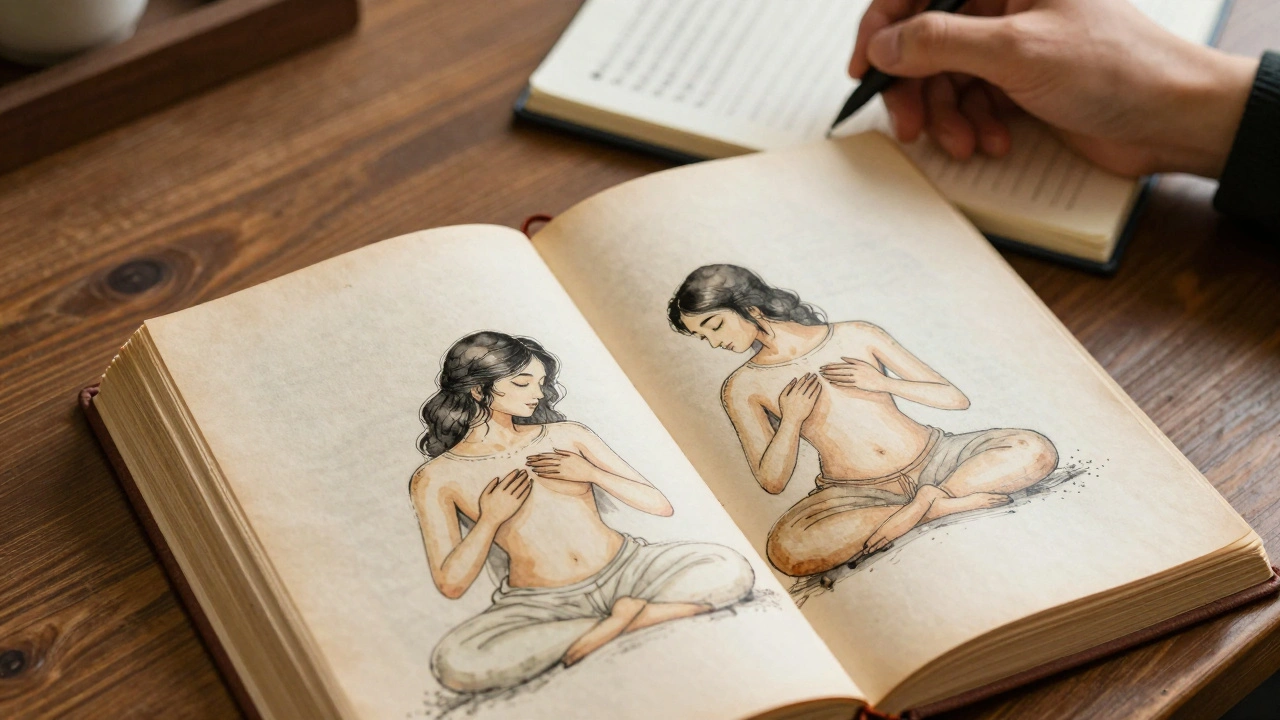
We treat love like a destination. Find the right person. Have the perfect relationship. Live happily ever after. But the Kamasutra sees love as a daily practice-like yoga, like cooking, like playing music. You don’t master it. You keep showing up.
That means some days will be awkward. Some touches will feel clumsy. Some silences will stretch too long. And that’s okay. The text doesn’t promise perfection. It promises presence.
When you stop chasing “the best sex” and start chasing “the most honest moment,” everything changes. You stop performing. You start connecting.
One woman I spoke to-she’s 48, lives in Brighton-said she and her husband started reading the Kamasutra together after 20 years of marriage. Not to spice things up. But because they realized they didn’t know each other anymore. They read one chapter a week. Talked about it. Cried sometimes. Laughed more. Two years later, she said, “We’re not better in bed. We’re just better with each other.”
It’s Not About Positions-It’s About Awareness
Let’s be clear: the Kamasutra positions aren’t the goal. They’re tools. Like a painter’s brush, not the painting itself.
Take the “Lotus Position” or the “Curling Wave.” These aren’t acrobatics. They’re designed to create closeness. To align bodies so that breath syncs. So that hearts beat in rhythm. So that two people feel like one moving thing-not two separate bodies sharing a bed.
Try this simple exercise: Lie down with your partner. No clothes. No goals. Just press your backs together. Breathe in for four counts. Hold. Breathe out for six. Do this for five minutes. Don’t talk. Don’t touch beyond skin-to-skin contact. Just breathe together.
What do you notice? Do you feel your heartbeat match theirs? Do you feel your tension soften? That’s the Kamasutra in action. Not in a position. In presence.
What You Need to Start
You don’t need to buy a fancy edition of the Kamasutra. You don’t need candles, incense, or a romantic getaway. You just need two things:
- Time. At least 20 minutes a week-no distractions, no phones.
- Courage. The courage to be vulnerable, even when it’s uncomfortable.
Start small. Read one passage. Talk about it. Not as a lesson, but as a question: What did this make you feel?
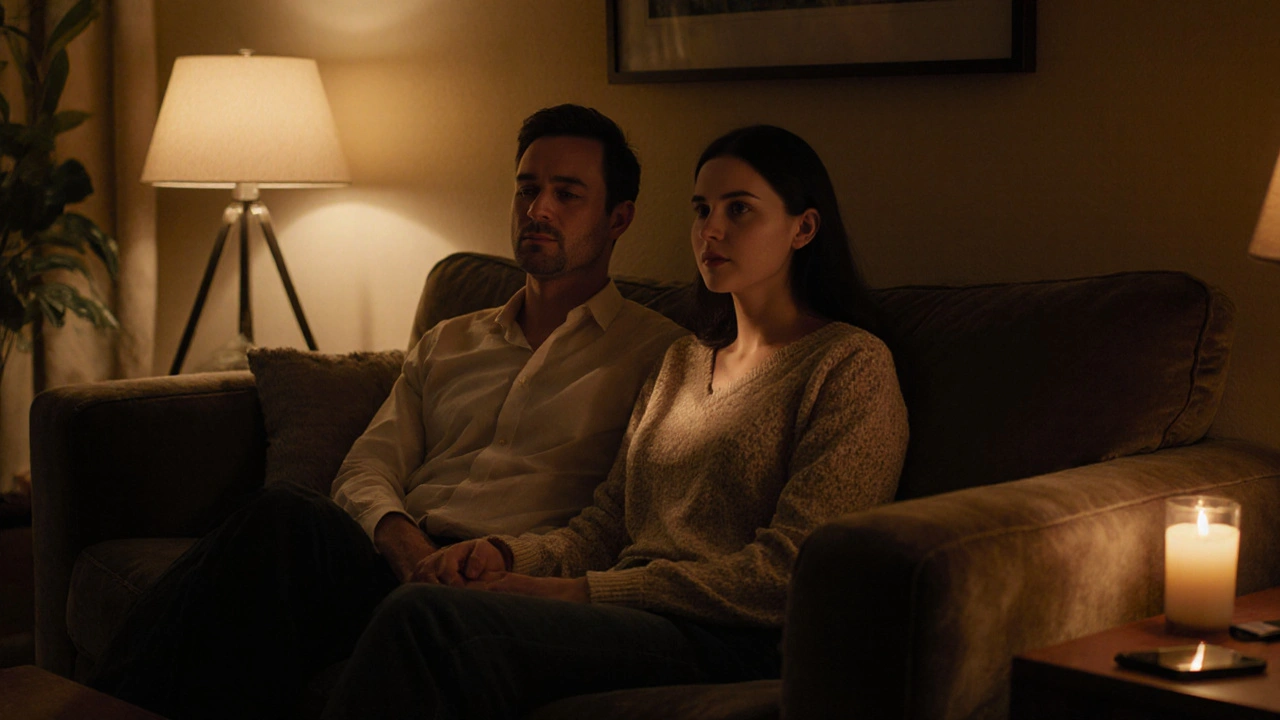
Or better yet-skip the book entirely. Just sit with your partner. Hold hands. Ask: What do you need right now? Then listen. Really listen.
Common Misconceptions
Let’s clear up a few myths:
- Myth: The Kamasutra is only for couples. Truth: It’s for anyone exploring their own desires-even if you’re single. Self-awareness doesn’t require a partner.
- Myth: It’s about having more sex. Truth: It’s about having better moments. Quality over quantity.
- Myth: You need to be physically flexible. Truth: The text honors all bodies. There are positions for every shape, size, and ability.
- Myth: It’s outdated. Truth: It’s one of the oldest surviving documents on human intimacy-and it’s still relevant because it focuses on emotion, not mechanics.
Where to Begin
Here’s a simple 3-step starter plan:
- Read one chapter. Start with Chapter 2: “On Embracing.” It’s about the meaning of touch-not just sex, but the way a hand on the back can say “I’m here.”
- Reflect. Write down one thing that surprised you. One feeling it brought up. Don’t judge it. Just name it.
- Share. Tell someone you trust-partner, friend, therapist-what you learned. Even if it’s just: “I didn’t realize how much I’ve been avoiding touch.”
You don’t need to finish the book. You just need to begin.
Final Thought: The Real Secret
The Kamasutra doesn’t promise better sex.
It promises better self-knowledge.
And that’s the most intimate act of all.







Enuma Eris
January 13, 2026 AT 14:48The Kamasutra is a colonial fetishization of Eastern sexuality dressed up as spiritual wisdom. This entire post romanticizes ancient texts without acknowledging their patriarchal roots. Vatsyayana wrote for elite Brahmins, not for the masses. You can’t reduce human intimacy to a 2,000-year-old manual written by men who had servants to clean their floors while they philosophized about breath.
George Christopher Ray
January 14, 2026 AT 05:59While your interpretation is aesthetically pleasing, it lacks academic rigor. The Kamasutra was never intended as a guide to emotional self-discovery. It was a codified system of sexual conduct, social etiquette, and courtly arts, grounded in dharma and artha, not modern psychotherapy. To frame it as a mirror for vulnerability is to engage in dangerous anachronism.
Rich Beatty
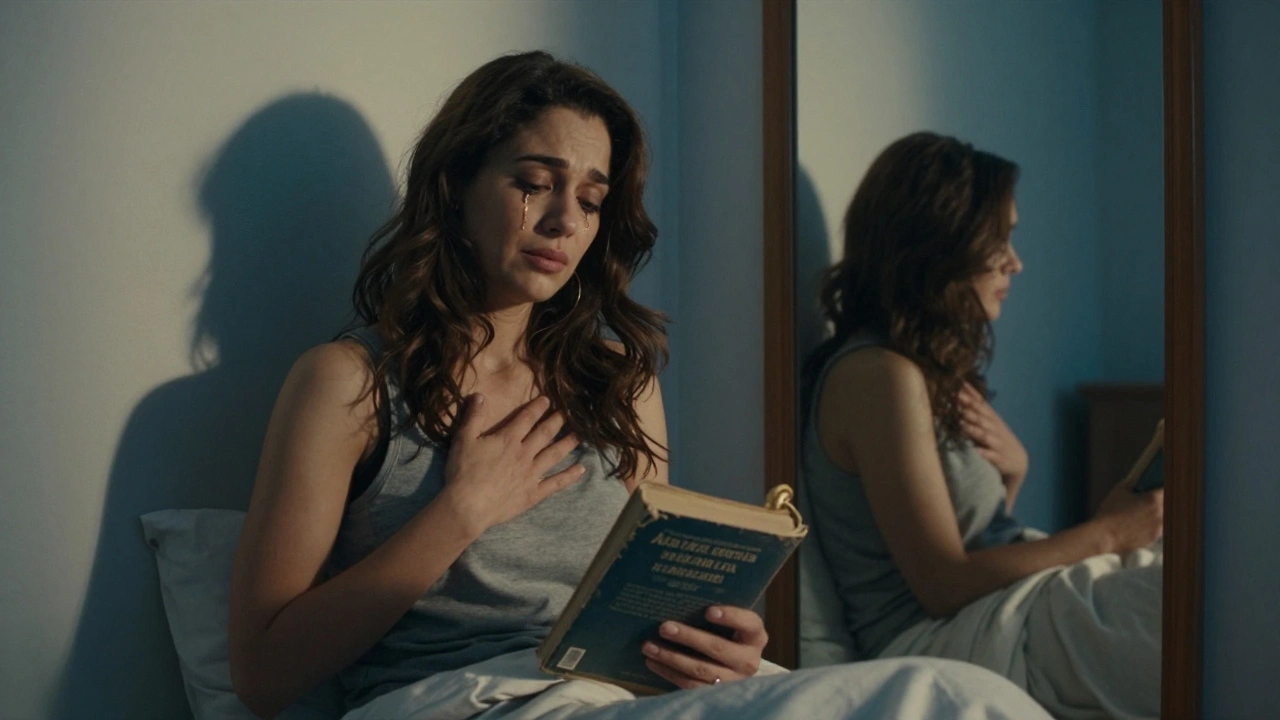
January 15, 2026 AT 23:00This is beautiful. I needed to hear this. I’ve been so focused on ‘doing it right’ in my relationship that I forgot to just be with my partner. The breathing exercise you mentioned? We tried it last night. No words. Just skin and breath. I cried. Not because it was sexy. Because I finally felt seen. Thank you for reminding me that intimacy isn’t performance.
Cody Deitz
January 16, 2026 AT 15:15Fascinating perspective. I’ve read the Kamasutra in translation and was struck by how much of it deals with social dynamics-how to host guests, how to manage servants, how to navigate class distinctions. The erotic passages are just one layer. It’s almost like a 1st-century BCE guide to holistic living, where sexuality is woven into daily rhythm rather than isolated as a separate act. This post captures that spirit well. Have you considered how it contrasts with Western models of sex as transactional or goal-oriented?
Ronnie Chuang
January 17, 2026 AT 04:56Bro this is just woke nonsense. Why are we reading ancient indian books about cuddling when we got real problems like inflation and crime? All this touchy feely stuff is just another way to make guys feel guilty for being men. The kamasutra is just porn with fancy words. You dont need to breathe together to know what you want. You just need to go to the gym and get a job.
j t
January 18, 2026 AT 18:52What you're describing here isn't really about the Kamasutra at all, it's about projection. You're taking your own unprocessed trauma around abandonment and intimacy and mapping it onto a text that was never meant to be interpreted through the lens of modern therapeutic culture. The Kamasutra doesn't care about your feelings, it cares about the alignment of energies, the balance of yang and yin, the ritual of touch as a sacred act of cosmic harmony. You think you're discovering yourself, but you're just reenacting the same patterns of codependency you learned in childhood, now dressed up in Sanskrit poetry. The real question isn't what you feel when you breathe with someone-it's why you need someone to breathe with at all.
Melissa Perkins
January 19, 2026 AT 01:58I’m 34, single, and I’ve been reading the Kamasutra on my own for the past six months-not to find a partner, but to understand my own boundaries. I used to think I didn’t want touch, but the chapter on ‘The Gentle Press’ made me realize I just didn’t trust anyone to hold me without trying to fix me. I started journaling after each reading. I wrote down what made me tense, what made me sigh. I didn’t share it with anyone. But for the first time, I felt like I was meeting myself. And now, when I do hold someone’s hand, it’s not because I’m scared they’ll leave. It’s because I want to be there. That’s the real gift of this text: it doesn’t ask you to change. It asks you to notice. And that’s enough.
Jimmy Carchipulla
January 20, 2026 AT 01:34Just breathe together. That’s it. 💙
Sriram T
January 21, 2026 AT 17:29OMG this is so deep 🤯 I was just reading the Kamasutra in Varanasi last month and the priest there told me it's not about sex but about the divine union of Shiva and Shakti!! You're basically channeling ancient Vedic wisdom without even knowing it!! This is what happens when you're spiritually aligned!! 🙏✨ I cried reading this in the Ganges at dawn!!