
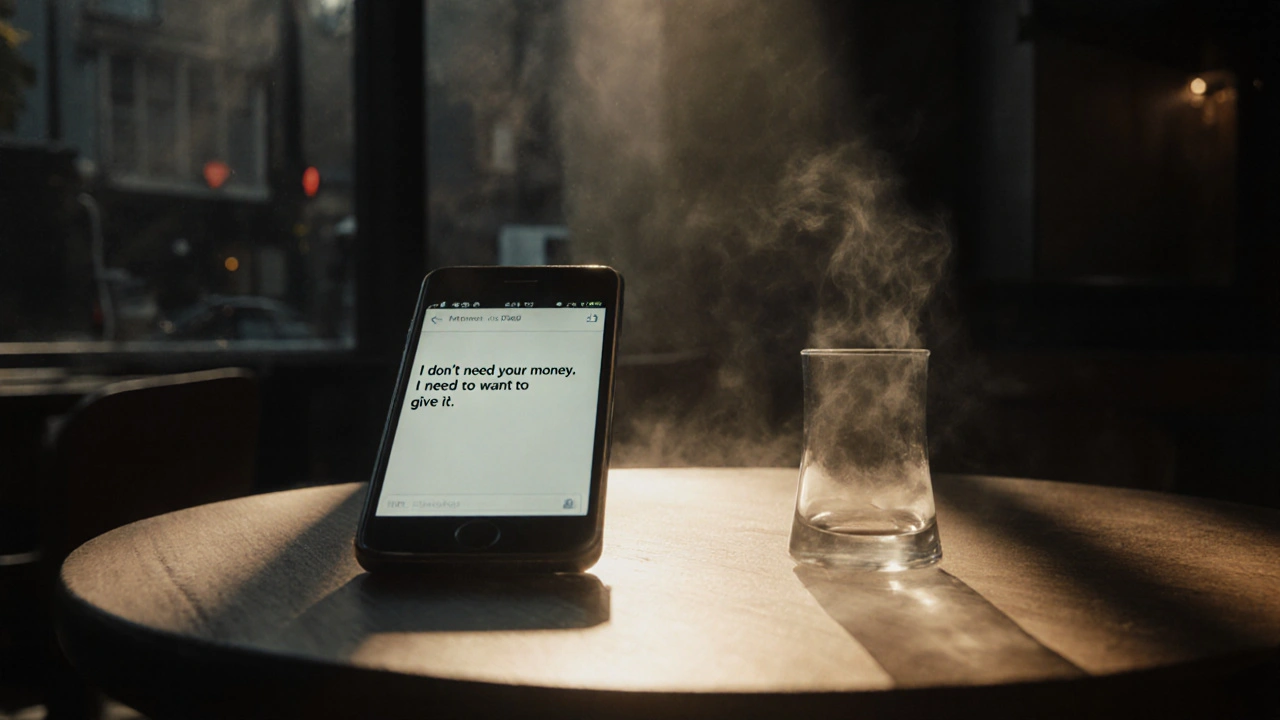
You walk into a coffee shop in Shoreditch, scrolling through your phone, and you see it: a post from someone calling themselves a findom in London. No photos. No contact info. Just a single line: "I don't need your money. I need you to want to give it." You pause. You feel something stir-not lust, not desire, but curiosity. Why does this resonate? Why do people in London, of all places, seek out financial domination?
Let’s be clear: findom isn’t about sex. It’s not about who you sleep with. It’s about control. Not the kind you see in movies, with chains and whips. This is quieter. Sharper. More psychological. It’s about surrendering power over your money-and finding something unexpected in that surrender.
What Is Findom, Really?
Financial domination, or findom, is a consensual power exchange where one person (the domme) receives money, gifts, or financial control from another (the sub). The domme doesn’t necessarily provide physical services. Sometimes, she doesn’t even meet the sub in person. The power lies in the transaction itself-the act of giving, the ritual of paying, the emotional weight behind each transfer.
In London, findom thrives because the city is full of people who’ve mastered the art of performance. Corporate lawyers, tech founders, artists, even teachers-they wear masks all day. Findom offers a space to drop those masks. For the sub, it’s not about being poor. It’s about being seen. For the domme, it’s not about wealth. It’s about holding space for someone’s vulnerability.
Think of it like this: you pay your therapist to listen. You pay your personal trainer to push you. You pay a findom to hold your shame, your guilt, your need to be controlled-and to make you feel safe doing it.
Why London? The City That Lets You Be Invisible
London is the perfect breeding ground for findom. It’s anonymous. You can live in Camden and never see your neighbor. You can work in Canary Wharf and never speak to the barista who makes your latte. That invisibility? It’s a gift for people who crave control without exposure.
Unlike other cities where kink communities are loud and visible, London’s findom scene is quiet. It lives in encrypted DMs, in PayPal transfers at 2 a.m., in voice notes that say, "I want you to spend your bonus on me. Not because I need it. Because I need you to want to give it."
There’s no need for clubs or events. No need for costumes. The power is in the transaction. A single £500 transfer can feel more intimate than a night out. Why? Because it’s not about what you bought. It’s about what you gave up.
The Psychology Behind the Exchange
Most people assume findom is about greed. It’s not. It’s about identity.
For the sub, giving money becomes a ritual of release. Studies in behavioral psychology show that people who experience loss aversion-the fear of losing something-are more motivated by the pain of loss than the pleasure of gain. In findom, the sub doesn’t just spend money. They lose it. And in that loss, they find relief. It’s a form of emotional detox.
For the domme, it’s about authority without responsibility. She doesn’t have to be a girlfriend. She doesn’t have to be a friend. She just has to be the one who says, "Do this." And the sub obeys. That’s power. Clean. Uncomplicated. No emotional baggage.
And here’s the twist: many dommes in London don’t keep the money. They donate it. They reinvest it. They use it to fund art projects, mental health initiatives, or even pay for someone else’s therapy. The money isn’t the goal. The control is.
What You’ll Find in London’s Findom Scene
There’s no single type of findom in London. The scene is diverse, layered, and deeply personal.
- The Minimalist Domme: She doesn’t post online. She only works with referrals. Her rules: no photos, no names, no calls. Just weekly transfers. She doesn’t reply unless you’ve paid.
- The Performance Artist: She runs a private Discord server. Each week, she releases a "task"-a poem, a video, a financial goal. You complete it. You pay. She acknowledges you with a single emoji. That’s all you need.
- The Therapist-Like Domme: She doesn’t ask for money until you’ve written her a 500-word letter explaining why you want to give it. She reads it. She responds with a single sentence. You cry. You pay.
- The Corporate Domme: She works in finance. Her clients are other professionals. Her rules: payments must come from your business account. She doesn’t want your savings. She wants your corporate identity to surrender.
There’s no "right" way. There’s only what works for you.

How to Find Findom Services in London
You won’t find findom on Google Maps. You won’t find it on Instagram ads. It’s hidden in plain sight.
Start with encrypted platforms: Telegram, Signal, or private Discord servers. Search terms like "London findom," "financial submission," or "power exchange UK." Don’t use your real name. Don’t use your real email. Use a burner account.
Read the bios carefully. The best dommes don’t say "I want your money." They say things like:
- "I’m here for those who need to feel small."
- "I don’t need your cash. I need your honesty."
- "If you’re looking for a girlfriend, leave now."
Trust your gut. If it feels transactional, walk away. If it feels like a mirror, keep reading.
What to Expect During a Session
There’s no physical session. No massage. No kissing. No nudity.
A "session" is usually a series of messages over days or weeks. It might start with a request: "Send me your bank statement. Just the balance. Not the details." You do it. She doesn’t respond for 48 hours. Then: "Good. Now send me your next paycheck when it hits."
You might be asked to write a letter. To delete a photo. To cancel a subscription. To tell someone you’re broke. The tasks are designed to break your usual patterns. To make you feel exposed. To make you feel free.
Some dommes will send voice notes. Others will send poems. A few will send nothing at all. Silence is part of the power.
The experience isn’t about pleasure. It’s about clarity. Many people say they feel lighter after a session. Like a weight they didn’t know they were carrying has been lifted.
Pricing and Booking
There’s no fixed price. No menu. No packages.
Some dommes ask for £20 a week. Others expect £500 in a single transfer. It depends on the dynamic, not the service.
Most don’t take bookings. You don’t "schedule" a session. You submit. You wait. You pay. If you’re chosen, you’ll know.
Payment methods? PayPal, Revolut, bank transfer. Cash? Never. Crypto? Rarely. The transaction has to be traceable. It’s not about hiding. It’s about owning it.
And yes-it’s legal. As long as no physical services are exchanged, it’s just money changing hands. No laws broken. Just boundaries crossed.

Safety Tips
This isn’t a game. It’s a psychological experiment. Treat it like one.
- Never share your real name, address, or workplace.
- Use a separate bank account or prepaid card. Never use your main account.
- Set a monthly spending limit. Stick to it. No exceptions.
- If you feel trapped, stop. Walk away. You don’t owe anyone your money.
- Don’t let it replace therapy. If you’re using findom to avoid emotional pain, get help.
- Trust your instincts. If something feels off, it is.
Remember: you’re not paying for sex. You’re paying for a mirror. And mirrors can show you things you’re not ready to see.
Findom vs. Sugar Dating in London
| Aspect | Findom | Sugar Dating |
|---|---|---|
| Primary Motivation | Power exchange, psychological surrender | Material gain, companionship |
| Physical Interaction | Usually none | Often includes dates, intimacy |
| Emotional Connection | Minimal or controlled | Often expected |
| Payment Structure | Voluntary, ritualistic, no fixed amount | Agreed allowance or gifts |
| Duration | Days to years, often anonymous | Weeks to months, usually known identities |
| Legal Status | Legal (no physical exchange) | Legal, but often blurred boundaries |
The biggest difference? Sugar dating is about what you get. Findom is about what you give up.
Frequently Asked Questions
Is findom legal in London?
Yes, as long as no physical sexual services are exchanged. Findom is a financial transaction, not a sexual one. UK law doesn’t regulate consensual money transfers between adults, even if they’re tied to power dynamics. As long as there’s no coercion, fraud, or exploitation, it’s perfectly legal.
Can I get addicted to findom?
You can get hooked on the feeling-not the money. The rush of surrendering control, the relief of being told what to do, the quiet validation of being seen in your vulnerability-it’s powerful. Some people use it as a coping mechanism. If you’re neglecting your job, relationships, or mental health because of it, that’s a sign to step back. It’s not the practice that’s dangerous. It’s the avoidance.
Do dommes in London meet their subs in person?
Rarely. Most prefer to stay anonymous. The power comes from the unknown. If you meet in person, it changes the dynamic. You’re no longer a shadow. You’re a person. And that’s not what most findom dynamics are built for. Some do meet after months or years-but only if both parties are ready. It’s not the goal. It’s the exception.
What if I feel guilty after paying?
That’s normal. Guilt is part of the process. Many people feel shame at first-especially if they’ve been taught that money equals worth. But in findom, guilt isn’t a sign you did something wrong. It’s a sign you’re doing something real. The goal isn’t to eliminate guilt. It’s to understand it. Why does it hurt? What are you afraid of losing? That’s where the real work begins.
Are there female findoms in London?
Yes. And they’re the majority. While findom is often portrayed as a male-dominated space, in London, most active dommes are women. Many are professionals-lawyers, therapists, artists-who use findom to reclaim control over their own power. They’re not looking for love. They’re looking for honesty. And they’re not afraid to ask for it.
Can I start my own findom practice in London?
You can, but don’t treat it like a business. Findom isn’t a service-it’s a mirror. If you’re doing it to make money, you’ll burn out fast. If you’re doing it because you understand human vulnerability, you might find people who need you. Start small. Write a single post. Don’t use photos. Don’t use your name. See who responds. Let the dynamic grow naturally. And never, ever pressure someone to pay.
Findom in London isn’t about money. It’s about what money reveals. It’s about the quiet desperation of people who’ve spent their lives performing-and finally found someone who doesn’t ask them to smile. If you’ve ever wondered what it feels like to be seen without being judged, maybe it’s not sex you’re looking for. Maybe it’s surrender.



Ross Silvis
November 16, 2025 AT 03:22So let me get this straight-you pay someone to tell you what to do with your money so you can feel better about your life? Sounds like a really expensive therapy session where the therapist gets a raise every time you cry. I’m just here for the free advice: get a dog. They don’t charge you £500 to say ‘good boy’.
Schechter Donovan
November 17, 2025 AT 13:19I get it. Sometimes you just need someone to say ‘stop overthinking’ without giving you a hug or asking for your emotional baggage. This isn’t about money-it’s about giving yourself permission to be weak in a world that demands strength all the time. I’ve had my own ‘£20 week’ with a stranger who just said ‘good job’ after I sent her a screenshot of my budget. Felt like I’d finally been heard.
Not weird. Just human.
Anant Raj Bharti
November 17, 2025 AT 14:01Interesting perspective. In India, we have a concept called ‘dāna’-giving without expectation. But here, it’s inverted: giving because you’re told to. There’s psychological depth here. The ritual of payment becomes a form of meditation. The domme isn’t greedy-she’s holding space. That’s rare. Most people want to fix you. This person just wants you to feel what you’re feeling. That’s powerful.
Also, the fact that many donate the money? That’s the real twist. The power isn’t in hoarding-it’s in letting go.
Meghan Horn
November 17, 2025 AT 21:55omg this is so real 😭 i’ve been doing this for 6 months and i didn’t know anyone else felt this way. the silence after i send the money? that’s the part that breaks me. not in a bad way. in a ‘finally someone sees me’ way. thank you for writing this. i’m not alone.
Franklin Lopez Silverio
November 19, 2025 AT 12:28Look, I used to think this was just some weird internet fetish. But then I started reading the stories-people who’ve lost jobs, gone through breakups, felt invisible for years-and suddenly it makes sense. This isn’t about being controlled. It’s about being *chosen*. Chosen to be vulnerable. Chosen to be seen. And that’s not a transaction. That’s a gift.
Yeah, it’s strange. But so is therapy. So is journaling. So is crying in your car after work. This is just another way people survive. Don’t judge it. Understand it.
Hakeem Homes
November 21, 2025 AT 09:33Oh, so now we’re romanticizing financial submission like it’s some poetic act of self-discovery? Please. This is just a legal loophole for emotional blackmail wrapped in woke jargon. You’re not ‘reclaiming power’-you’re handing over your dignity to a stranger who probably has a side hustle selling ASMR voice notes. And don’t give me that ‘it’s not sex’ crap-this is just kink with a spreadsheet. You think you’re profound? You’re just broke and lonely with a PayPal account.
Also, ‘don’t use your real name’? Oh, so you’re not just a fraud-you’re a coward too. Pathetic.
Bernard Mutua
November 22, 2025 AT 00:23This is a dangerous cultural decay. In my country, we respect hard work, discipline, and financial responsibility. What you describe here is a collapse of moral order-individuals surrendering their economic agency to anonymous figures in encrypted chats. This is not empowerment. It is psychological erosion. The state must regulate this. No citizen should be allowed to transfer funds based on emotional manipulation under the guise of ‘power exchange.’ This is a gateway to exploitation, and it’s being normalized by media that glorifies decadence. I urge you to reconsider your values before you lose everything.
Bonnie Cole
November 22, 2025 AT 22:54As someone who’s lived in both London and Mumbai, I’ve seen how anonymity shapes human behavior. In London, the silence between strangers is sacred. People don’t ask how you are-they just nod. That’s why findom works here. It’s not about the money. It’s about the ritual of being acknowledged without being seen. In India, we have ‘guru-shishya’ relationships where the student gives something of value to the teacher-not for service, but for transformation. This is the same, but inverted. The domme isn’t the teacher. She’s the mirror.
And yes, most dommes are women. Because women have spent centuries being told to be quiet, to be polite, to be small. Now they’re using financial power to say: ‘I will hold your silence. I will not flinch. And you will not be alone.’ That’s not fetish. That’s revolution.
Don’t reduce it to sex. Don’t call it weird. Don’t pathologize it. Listen. Because the people doing this? They’re not broken. They’re just tired of pretending they’re not.